
Custer State Park
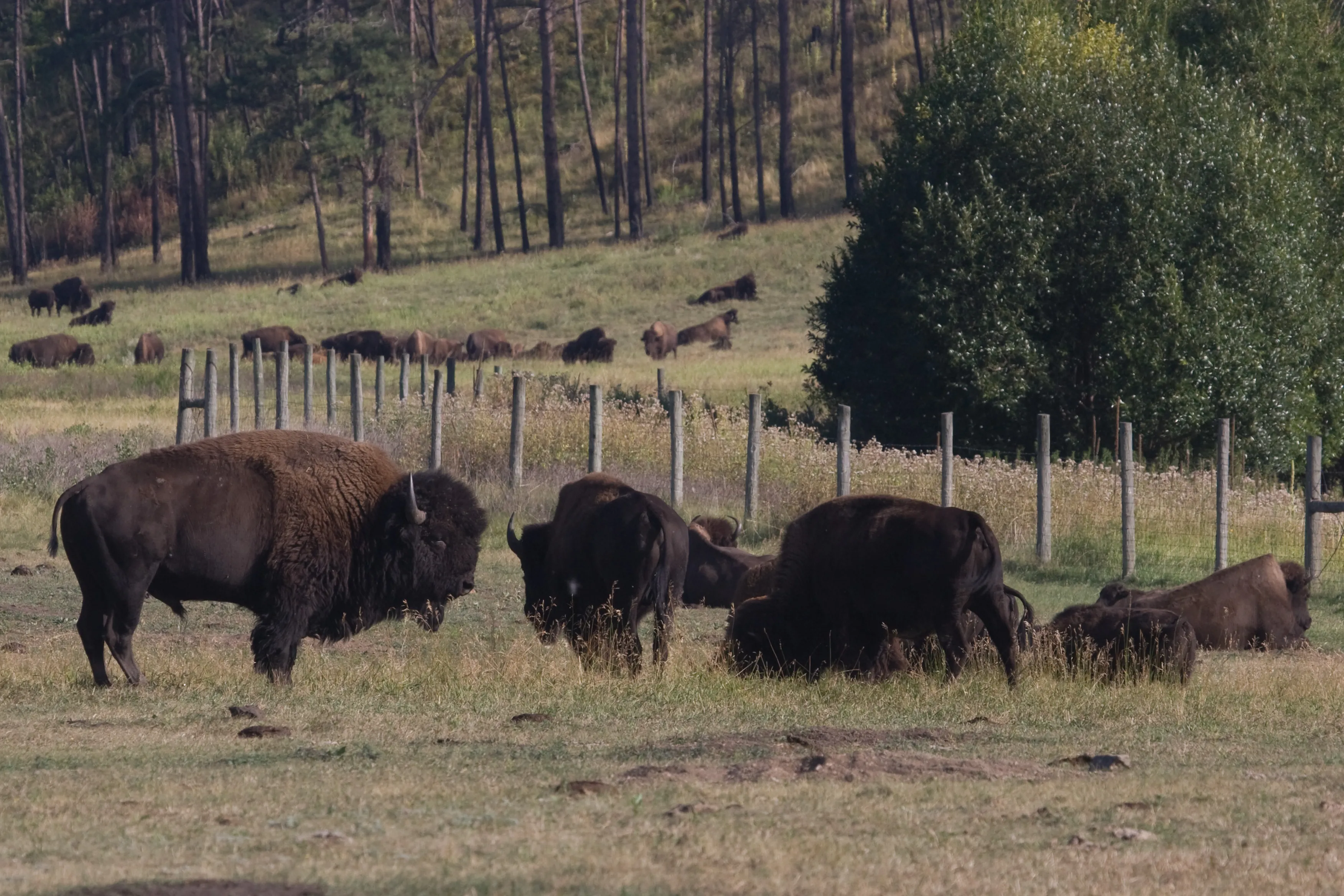
Custer State Park covers 71,000 acres in the Black Hills of southwestern South Dakota. The park holds a free-roaming bison herd of around 1,400 animals, the Needles Highway, granite spires, four lakes, and a trail network that ranges from easy lakeside walks to demanding summit climbs. It sits at the crossroads of the Black Hills, with Mount Rushmore and Wind Cave National Park both within a short drive, making it a natural base for exploring the region.
The Bison Herd and Wildlife Loop Road
The park’s bison herd numbers around 1,400 animals and roams freely across the southeastern grasslands. The 18-mile Wildlife Loop Road is the best way to encounter them, along with pronghorn, elk, wild turkeys, white-tailed deer, and the park’s famous feral burros. Early morning and late afternoon drives produce the most reliable bison and pronghorn sightings. The loop is paved and accessible to all vehicles, but conditions change quickly when animals cross or block the road. Patience is essential, and stopping in the road for extended periods is discouraged. Beyond the loop, bison can appear on any road or trail in the park at any time of year.
The Needles Highway and Iron Mountain Road
Two of the Black Hills’ most-used scenic drives run through or along the edge of Custer State Park. The Needles Highway, South Dakota Highway 87, winds 14 miles through cathedral-like granite spires and passes through tunnels so narrow that larger RVs and trailers cannot fit. Vehicles over 35 feet in length or over 8 feet wide are prohibited. Iron Mountain Road connects the park to Mount Rushmore through a series of pigtail bridges and tunnels that frame the monument. Both roads are closed in winter and typically open from May through October, though dates vary by year and conditions.
Hiking the Granite Peaks and Backcountry
The park maintains roughly 60 miles of trails. Harney Peak, now officially named Black Elk Peak, is the highest point in the United States east of the Rocky Mountains at 7,244 feet and sits just outside the park boundary within Black Elk Wilderness. Trailheads inside the park, including the popular route from Sylvan Lake, provide access. The round trip runs about 7 miles with significant elevation gain. Closer to the park’s center, the Sunday Gulch Trail loops through a narrow granite canyon with stream crossings and wooden staircases. The Lovers Leap Trail near the Game Lodge area offers a shorter climb with strong views over the southern hills. Most trails are clearly marked but can be rocky and uneven, so sturdy footwear is appropriate even on shorter routes.
Lakes, Swimming, and Water Recreation
The park contains four major lakes: Sylvan Lake, Legion Lake, Center Lake, and Stockade Lake. Sylvan Lake is the most visited, ringed by granite boulders and connected to several trailheads. Swimming is permitted at designated beaches, and the water stays cold through summer. Rowboats, paddleboats, and kayaks are available for rent at Sylvan and Legion lakes. Fishing is available throughout the park; a valid South Dakota fishing license is required. Motorized boats are not permitted on Sylvan or Legion lakes, keeping those areas quiet.
Lodges, Cabins, and Camping
The park operates four resort lodges, including the State Game Lodge, which served as the Summer White House for President Coolidge in 1927. Cabins and cottages are available throughout the park for multi-night stays. Campgrounds range from full-hookup RV sites to tent-only areas and a small number of backcountry sites. Reservations are strongly recommended from late June through August and can be made through the South Dakota Game, Fish and Parks reservation system. The park stays open year-round, though many facilities and roads close from late fall through early spring.
Pet Policy
Pets are welcome in Custer State Park and must be on a leash no longer than 6 feet at all times. Pets are allowed in campgrounds, on trails, and along roads, but are not permitted on swimming beaches or inside park buildings. Pet owners are responsible for cleaning up waste throughout the park.
Wildlife to Be Aware Of
Bison are the most common large animal visitors encounter, and they are unpredictable despite appearing calm. Never approach a bison on foot or by vehicle. If bison surround or approach your vehicle, stay inside with windows closed and wait for them to move. People have been seriously injured by bison that appeared docile.
Mountain lions live in the Black Hills and are occasionally spotted inside the park. Avoid hiking alone at dawn, dusk, or after dark. Keep children within arm’s reach on trails, and make noise when moving through dense brush or timber. If you encounter a mountain lion, do not run. Face the animal, make yourself appear large, and back away slowly.
Prairie rattlesnakes are found in rocky areas, dry grasslands, and near prairie dog towns throughout the park. Watch where you place your feet and hands when hiking off-trail or climbing over boulders. Rattlesnakes are most active during warm weather and are generally not aggressive unless cornered or surprised.
The park’s feral burros, descendants of animals used in early tourism, frequently approach vehicles along the Wildlife Loop Road in search of food. Do not feed them. Burros can bite and kick, and feeding them encourages aggressive behavior toward other visitors.
Practical Information
Custer State Park is located in Custer County in the Black Hills of southwestern South Dakota. The town of Custer lies a few miles west of the park entrance on U.S. Highway 16A. From Rapid City, the park is roughly 50 miles southwest via Highway 79 or Highway 16. Entry costs $25 for a seven-day vehicle pass; an annual South Dakota state parks license is also accepted. Reservations for lodging and camping are available through the South Dakota Game, Fish and Parks website and are recommended well in advance for summer visits.
Frequently Asked Questions
How much does it cost to enter Custer State Park?
Entry requires a $25 seven-day vehicle pass, and an annual South Dakota state parks license is also accepted.
Are dogs allowed on trails at Custer State Park?
Dogs are permitted in Custer State Park, though they must be kept on a leash, particularly on trails where wildlife including mountain lions and prairie rattlesnakes may be encountered.
Can you drive the Wildlife Loop Road in an RV or with a trailer?
The Wildlife Loop Road itself is paved and open to all vehicles, but the Needles Highway portion of the park prohibits vehicles over 35 feet in length or over 8 feet wide due to narrow tunnels.
Is it safe to get out of your car to see the bison herd?
Visitors should remain inside their vehicles when bison are near, as the herd roams freely and animals can appear on any road or trail in the park at any time of year.