
Watkins Glen State Park
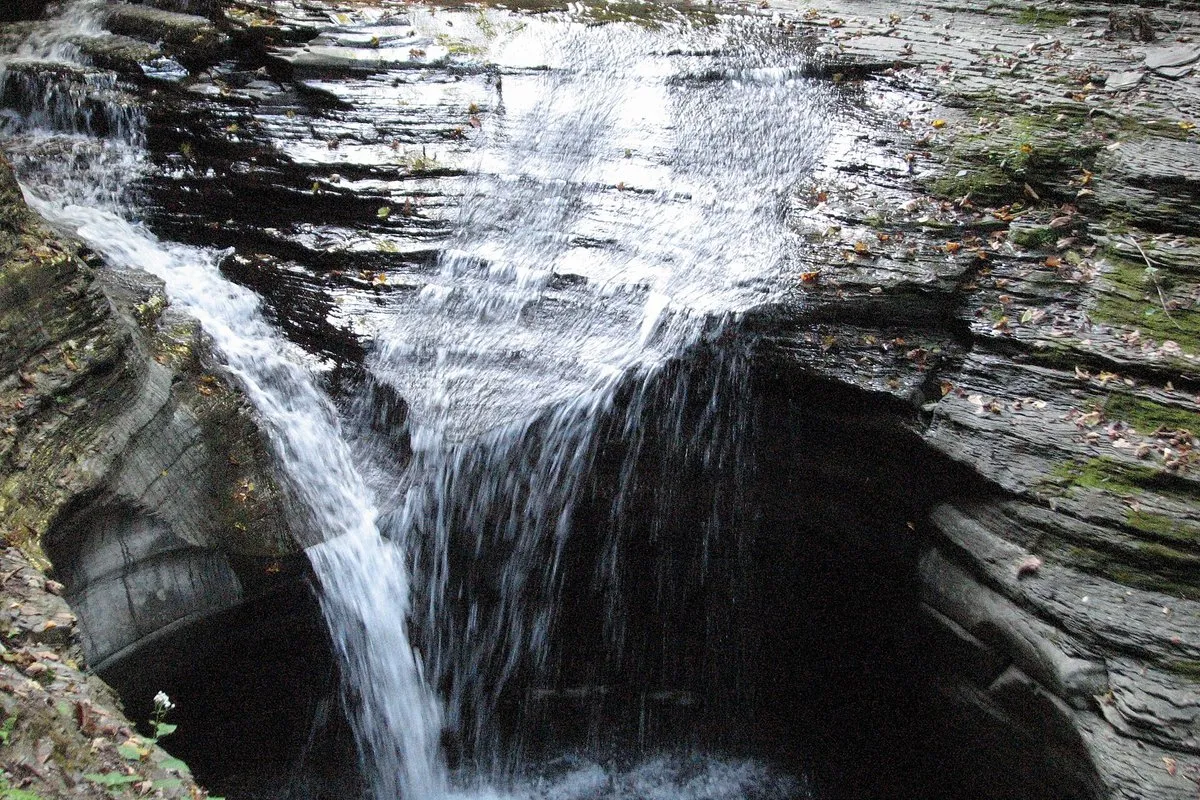
Watkins Glen State Park occupies a dramatic gorge cut through the hills at the southern end of Seneca Lake in the Finger Lakes region of New York. The park is centered on a two-mile ravine where Glen Creek has carved through layered shale and sandstone over thousands of years, producing 19 waterfalls, sculpted rock formations, and a trail system that passes behind, beside, and over the falling water. It draws well over a million visitors a year and is widely considered one of the most visually striking gorge walks in the eastern United States.
The Gorge Trail and Its 19 Waterfalls
The Gorge Trail is the reason most people come here, and it earns the attention. The trail runs roughly 1.5 miles through the canyon, climbing more than 800 stone steps, crossing stone bridges, and passing through a tunnel carved directly into the rock. Waterfalls range from wide curtains to narrow chutes, and several sections of trail pass so close to the falls that the spray is unavoidable. The most photographed stretch involves a series of cascades and a stone archway framing the water beyond it.
Hikers should allow at least 90 minutes for the gorge one-way, and longer if the trail is crowded or if you plan to return via the North Rim or South Rim trails along the canyon’s upper edges. Those upper trails offer aerial views into the gorge and a quieter walking experience away from the main crowds. The full loop using all three trails covers about 5 miles.
The gorge trail is generally open from mid-May through November, weather permitting. Flood closures do occur after heavy rain, sometimes with little notice, so checking conditions before arrival is worth the effort.
Camping at Watkins Glen
The park operates a full campground on the grounds above the gorge with more than 300 sites, including options for tents, trailers, and RVs. Electrical hookups are available at a portion of the sites. The campground also has cabins for those who prefer a roof overhead without leaving the park.
The location makes this a practical base for exploring the broader Finger Lakes area, with Seneca Lake wineries, Cayuga Lake, and several other state parks within easy driving distance. Campground facilities include showers, flush toilets, and a dump station. Firewood is sold in the park, and food concessions and a gift shop operate seasonally. Reservations through the New York State Parks reservation system are strongly recommended for summer weekends and holiday periods, as the campground fills consistently during peak season.
Swimming Pool
A separate swimming area at the south entrance provides access to the park’s Olympic-size pool and kiddie pool. The pool is monitored by lifeguards during the summer season, typically from late June through Labor Day, though hours and dates can shift with staffing and water quality. Restrooms and showers are available near the pool area. This section of the park has a more relaxed, family-oriented feel compared to the gorge, and it offers a different reason to visit even for those who have walked the trail before.
Pet Policy
Pets are allowed in the campground and on the rim trails but are not permitted in the gorge itself. Leashes no longer than six feet are required at all times in pet-accessible areas. Pets are also not allowed at the swimming pool. Given the steep and often crowded nature of the gorge trail, the restriction there is practical as well as regulatory. Service animals follow applicable state and federal guidelines.
Wildlife to Be Aware Of
Black bears are present in the broader Finger Lakes and Southern Tier region and can move through wooded areas near campgrounds. Campers should store food in a locked vehicle or other hard-sided container, never leave food or scented items in tents, and clean up cooking areas thoroughly. A fed bear is a dangerous bear, and repeated human food access leads to conflicts that rarely end well for the animal.
Timber rattlesnakes occur in the Finger Lakes and Southern Tier region, including rocky wooded habitat, though encounters in the park are uncommon. They are not aggressive by nature but will defend themselves if surprised or cornered. Stay on marked trails, watch where you step and place your hands, and give any snake you encounter plenty of space and time to move away. Rock ledges along the gorge walls and the rim areas are the most likely zones for encounters.
Wet rock surfaces throughout the gorge present a consistent hazard regardless of season. The mist from nearby waterfalls keeps stone steps and bridges damp even on dry days, and algae growth adds to the slipperiness. Footwear with real traction makes a meaningful difference here. Sandals and smooth-soled shoes lead to falls every season. Take your time on the steps, use the handrails, and watch your footing around the base of falls where water collects on flat stone.
Practical Information
Watkins Glen State Park is located at the village of Watkins Glen, New York, at the southern tip of Seneca Lake. The park entrance is just off Franklin Street in the village center. From the north, Route 14 follows the western shore of Seneca Lake directly into town. From the south, Route 14 approaches via Horseheads and Montour Falls.
Parking costs $10 per vehicle during peak season. The Empire Pass is accepted and covers the parking fee. Foot access to upper trailheads may be available without charge during the off-season when the main lot is unstaffed. Camping fees vary by site type and are separate from the parking fee. Reservations for camping can be made through ReserveAmerica or the New York State Parks website. The gorge trail itself is free to walk once inside the park. The nearest full services, including fuel, lodging, and restaurants, are in the village of Watkins Glen immediately adjacent to the park.
Frequently Asked Questions
Are dogs allowed at Watkins Glen State Park?
Dogs on leashes no longer than six feet are welcome in the campground and on the rim trails, but they are not permitted in the gorge itself or on the swimming beach.
How much does it cost to visit Watkins Glen State Park?
Parking costs $10 per vehicle during peak season, and the Empire Pass is accepted in lieu of the fee; camping fees vary depending on site type and hookup availability.
When does the Gorge Trail open and close each year?
The Gorge Trail typically opens in mid-May, with the 2026 season opening set for May 9, and generally closes around mid-October, though flood closures after heavy rain can occur with little notice throughout the season.
Are there any wildlife or safety hazards to know about before hiking the gorge?
Hikers should watch for extremely slippery wet rock surfaces near the waterfalls year-round, and the surrounding Finger Lakes region is home to black bears and timber rattlesnakes, particularly near campsites, rocky ledges, and hillside areas.