
Taughannock Falls State Park
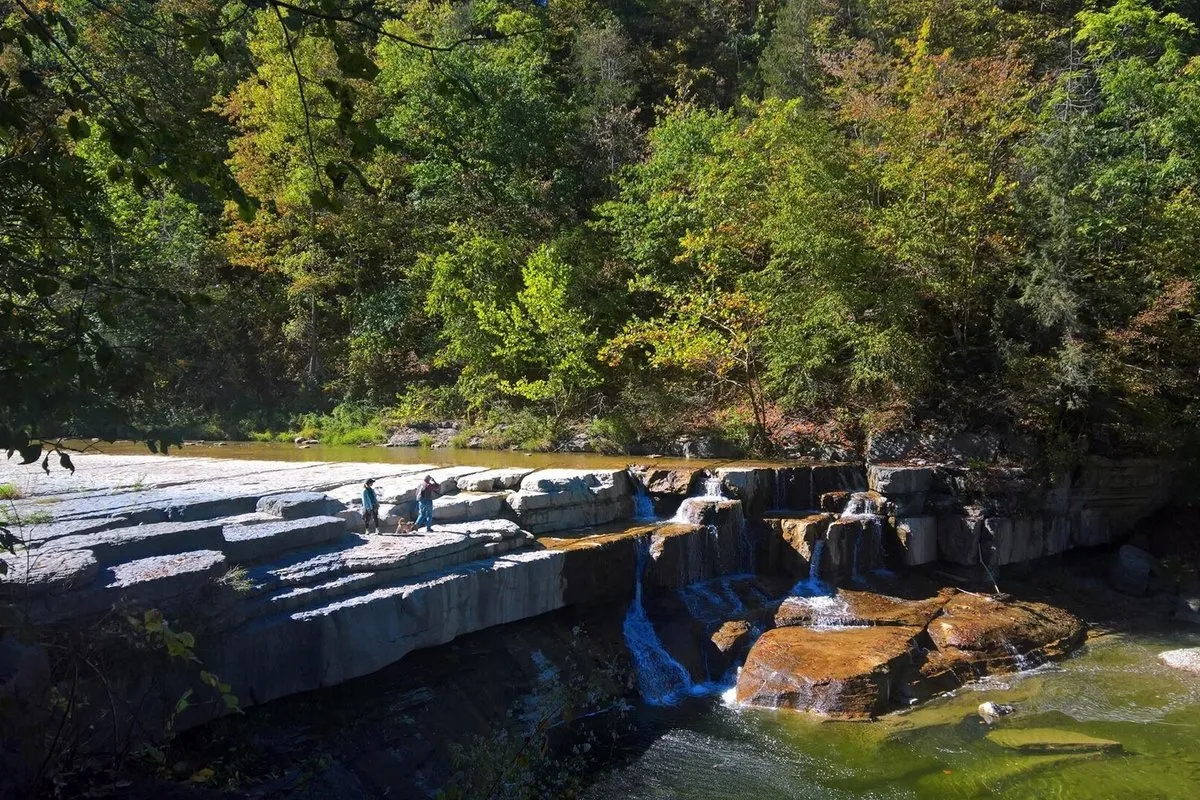
Taughannock Falls State Park sits on the western shore of Cayuga Lake in the Finger Lakes region of central New York, about 10 miles north of Ithaca. Its defining feature is Taughannock Falls, a single-drop waterfall that plunges 215 feet into a wide glacial gorge, making it taller than Niagara Falls. That combination of geological drama, lakeshore access, and well-developed campgrounds draws visitors looking for everything from a short hike to a week-long stay.
Taughannock Falls and the Gorge
The falls are the reason most people come, and they deliver. The main gorge trail follows Taughannock Creek for about three-quarters of a mile from the parking area to a viewing platform at the base of the falls. The walk is flat, easy, and open to everyone, including families with strollers on dry days. The walls of the gorge rise nearly 400 feet on either side, carved out of layered shale and sandstone, and the scale builds gradually as you move upstream.
Separate rim trails run along the top of the gorge and connect two overlook points above the falls. The views from the rim are dramatic but look down rather than up, which gives a completely different perspective than the gorge trail. Together, the trails form a loop of roughly 3.5 miles if you cross through the main park area to connect them.
The gorge is impressive across all seasons. In spring, snowmelt pushes water volume up significantly. By late summer, flow can slow to a trickle but the rock amphitheater is no less striking. In winter, ice formations build on the gorge walls and the falls sometimes freeze partially, though trail conditions become difficult and access may be limited.
Cayuga Lake Access and Camping
The park has two distinct zones, and the lakeside section functions almost independently from the gorge. A swimming beach on Cayuga Lake is open during summer months with lifeguard coverage during designated hours. There is also a boat launch, making the park a useful stop for kayakers, canoeists, and motorized watercraft heading out onto one of the larger Finger Lakes. Fishing from shore or by boat is common, with Cayuga Lake supporting bass, trout, and various panfish.
Camping is available in the main camping area, with over 60 tent and trailer sites and access to flush toilets and shower facilities. Reservations are strongly recommended from late spring through Labor Day, as sites fill quickly on weekends. The park also has 16 cabins available for rental in a separate cabin area, which book out well in advance during peak season.
The lakeside area includes picnic shelters and open lawn space, and the views west across Cayuga Lake at the end of the day make it one of the more rewarding spots in the Finger Lakes for an evening meal outdoors.
Pet Policy
Pets are welcome in the park, with a maximum of two pets per campsite or day use area unless otherwise posted. They must be supervised and either crated or on a leash no longer than six feet, and proof of rabies vaccination may be required. They are allowed on the gorge trails and rim trail, in picnic areas, and in the campgrounds. Pets are not permitted on guarded beaches, in playgrounds, or in park buildings, except for service animals. Owners are expected to clean up after their animals throughout the park.
Wildlife to Be Aware Of
Black bears range through parts of central and western New York and occasionally pass through semi-rural areas, so food storage should be treated seriously even if sightings at the park are infrequent. Store food, trash, and scented items securely, ideally in a vehicle or closed container, and do not leave coolers or food bags unattended at your site. Bears that associate campsites with food become a persistent problem, so proper storage protects both future visitors and the animals.
Timber rattlesnakes are present in parts of New York, favoring rocky ledges and hardwood forest habitat. An encounter is uncommon, but the possibility is real enough to take seriously. They are venomous and should not be approached or handled. Staying on marked trails and watching where you place your hands and feet on rocky terrain is the most effective precaution. The gorge trail at the base is less likely habitat for rattlesnakes than the drier, rockier rim environment.
White-tailed deer move through the park year-round and are especially active at dawn and dusk. Use extra caution when driving the park roads during those hours, particularly near wooded edges and the campground access roads.
The gorge trail itself carries a physical hazard worth treating seriously. Wet shale near the base of the falls and along the creek bed is extremely slippery, and the footing can be deceptive even on dry days. Stay on the designated path and off the creek rocks. Falls injuries in this area are not uncommon, and the terrain does not get safer with confidence.
Practical Information
Taughannock Falls State Park is located at 1740 Taughannock Blvd., Trumansburg, NY 14886, roughly 10 miles north of Ithaca along Route 89. The park is open year-round, though some facilities close after the summer season and winter access may be limited during severe weather.
The day-use vehicle fee is $10 per vehicle, collected daily from sun up to sun down. The Empire Pass is accepted. Pedestrians and cyclists enter for free. Camping fees vary depending on site type and amenities. Reservations for campsites and cabins can be made through the New York State Parks reservation system at newyorkstateparks.reserveamerica.com and are highly recommended for summer weekends. For current trail conditions, closures, or off-season facility status, contact the park directly or check the New York State Parks website before visiting.
Frequently Asked Questions
Are dogs allowed at Taughannock Falls State Park?
Dogs are welcome throughout the park, including on the gorge and rim trails, in picnic areas, and in the campgrounds, as long as they are kept on a leash no longer than six feet. Pets are not permitted on the swimming beach or inside any park buildings, and owners must clean up after their animals.
How much does it cost to enter Taughannock Falls State Park?
The vehicle entry fee is $8 per car during the season, and Empire Passport annual pass holders enter free. Pedestrians and cyclists are admitted at no charge, and camping fees vary by site type.
How hard is the hike to the base of Taughannock Falls?
The main gorge trail is a flat, easy walk of about three-quarters of a mile from the parking area to the viewing platform at the base of the falls, and it is accessible to families with strollers on dry days. The trail follows Taughannock Creek through a gorge with walls rising more than 400 feet on either side, and the wet shale near the falls base can be slippery year-round, so caution is advised.
What is the best time of year to visit Taughannock Falls?
The gorge is striking across all seasons, with the highest water volume in spring when snowmelt feeds the falls and dramatic ice formations appearing on the gorge walls in winter. Summer and early fall offer the easiest trail conditions and access to the Cayuga Lake swimming beach, though winter visits may face limited trail access.