
Ha Ha Tonka State Park
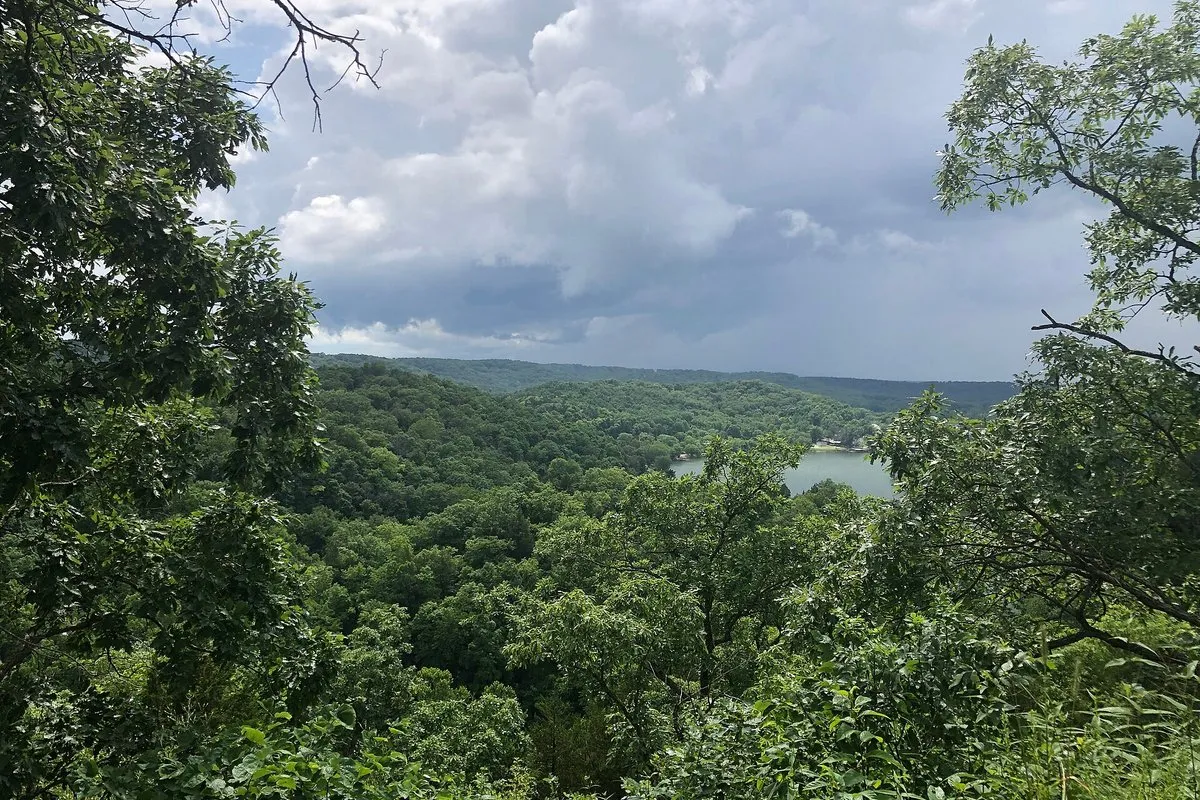
Perched above the Lake of the Ozarks in Camden County, Missouri, Ha Ha Tonka State Park is one of the most geologically and historically layered parks in the state. Its centerpiece is the ruin of a grand early-twentieth-century castle, left roofless and skeletal after a fire, and behind it lies a landscape riddled with sinkholes, a cathedral-like natural bridge, a massive spring, caves, and karst bluffs dropping to the water below. The combination is genuinely unusual, and few Missouri parks pack this much variety into a single visit.
The Castle Ruins and Their History
The stone shell visible from much of the park belonged to Robert Snyder, a Kansas City businessman who began building a European-style estate here in 1905. He died in an automobile accident in 1906 before it was finished, and the project stalled. His sons completed the structure in 1922, but a fire in 1942 gutted the main building. What remains today is a striking ruin of tower walls and open arched windows framing views of the lake and bluffs. A short paved path leads from the parking area directly to the ruins, making this one of the most accessible highlights in the park. Interpretive signs tell the full story of the Snyder family and the estate’s unusual trajectory.
Geological Features: Caves, a Natural Bridge, and the Great Spring
The karst geology here is exceptional even by Ozarks standards. Ha Ha Tonka Spring discharges millions of gallons of water daily, rising from a cave system and feeding a clear stream that flows toward the lake. The Natural Bridge is a dolomite arch that spans sixty feet, stretches seventy feet wide, and rises more than a hundred feet above the ravine carved by centuries of water and dissolution. A series of connected trails winds through a landscape of collapsed caves, sinkholes, and exposed bluffs, giving visitors a close look at how water slowly reshapes limestone terrain over time. Colosseum Sink, one of the more dramatic features, is a large natural amphitheater formed by a cave roof collapse. The Dell Rim Trail and the Turkey Pen Hollow Trail together cover most of the major geological landmarks, and the loop connecting them runs roughly four to five miles.
Trails and How to Use Them
The park has fifteen miles of hiking trails, ranging from the short paved walk to the castle ruins to more rugged backcountry paths. The Balanced Rock Trail leads to a large detached boulder teetering above a bluff edge. The River Trail follows the lake shoreline and offers some of the better views of the bluffs from below. Most trails are well-marked and maintained. Backcountry camping is available along the Turkey Pen Hollow Trail, and campers must register before heading out. Camping is free but registration is required. The park features two picnic shelters equipped with electricity, picnic tables, and an outdoor grill, and they work well as a staging area for families planning longer days.
Water Access and the Lake Setting
Boaters can access the park via the Big Niangua arm of the Lake of the Ozarks at the fourteen-mile marker, with docks on both the castle ruins and spring side of the cove. There is no designated swim beach within Ha Ha Tonka itself, but the surrounding lake area sees heavy recreational use, and visitors coming from nearby Camdenton will pass through full resort and marina infrastructure on the way in. Fishing is permitted under statewide regulations at the Lake of the Ozarks access points within the park but is not permitted in Ha Ha Tonka Spring.
Pet Policy
Pets are welcome at Ha Ha Tonka State Park and must be kept on a leash no longer than eight feet at all times. They are allowed on trails and in picnic areas. Pets are not permitted inside any park buildings or shelters. Owners are expected to clean up after their animals.
Wildlife to Be Aware Of
Copperhead snakes are present throughout the park and are worth watching for carefully along rocky bluffs, near cave entrances, and on wooded trails. They are well camouflaged against leaf litter and rock surfaces and are most active from spring through early fall. Walk carefully in these areas, avoid reaching into crevices or under rocks, and keep children and pets close. Ticks are a consistent concern across the oak woodlands and in areas with tall grass. Wearing long pants, using insect repellent with DEET, and doing a full body check after any hike are practical steps worth taking any time of year, though tick activity peaks in late spring and summer. The park is also home to ringed salamanders and other sensitive amphibian species that rely on undisturbed natural areas. Visitors are asked to stay on marked trails, especially near cave entrances, springs, and wetland margins, both for their own safety and to avoid disturbing these animals and their habitat.
Practical Information
Ha Ha Tonka State Park is located at 1491 State Road D, Camdenton, Missouri, with coordinates 37.963303, -92.769672. Camdenton is the nearest town, approximately five miles away. The park is reached via State Road D off U.S. Highway 54. Entry is free for day use. Camping is free but registration is required. Picnic shelter reservations can be made through the Missouri State Parks reservation system. The park is open year-round, with hours running from 7 a.m. to sunset April through October and 8 a.m. to sunset November through March. Facilities include restrooms, picnic areas, and an interpretive kiosk near the trailhead parking area.
Frequently Asked Questions
Is there an entry fee for Ha Ha Tonka State Park?
Ha Ha Tonka State Park has free day-use entry, and backcountry camping is also free, though hikers are required to register before using those sites.
Are dogs allowed at Ha Ha Tonka State Park?
Dogs are welcome at Ha Ha Tonka and must be kept on a leash no longer than eight feet at all times. They are allowed on trails and in picnic areas but not inside park buildings or shelters.
Can you go inside the castle ruins at Ha Ha Tonka?
Visitors can reach the castle ruins via a short paved path from the parking area, where interpretive signs tell the story of the Snyder family and the estate, though the main building was gutted by a fire in 1942 and only roofless walls and open arched windows remain.
Are there any dangerous animals or hazards on the trails?
Copperhead snakes are present near rocky bluffs, cave entrances, and wooded trails, and tick exposure is a risk throughout the oak woodlands and tall grass areas, so visitors should wear protective clothing and stay on marked trails.