
Bennett Spring State Park
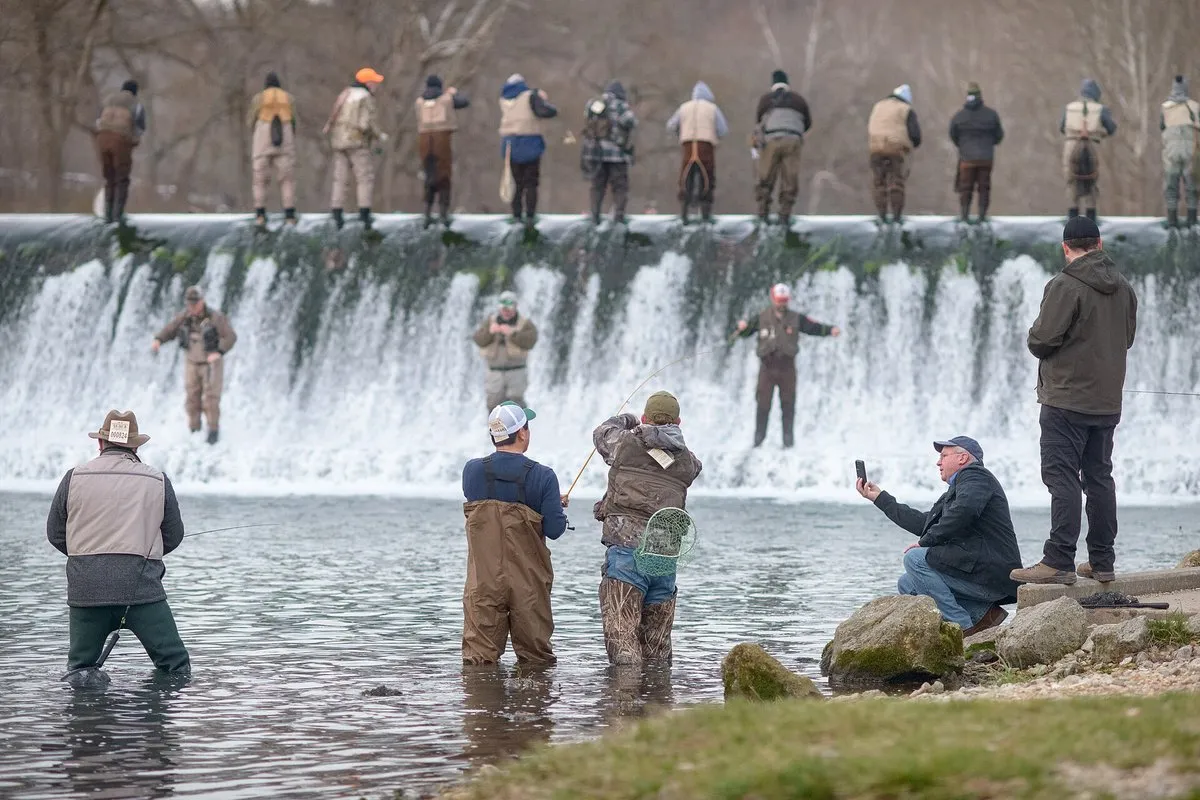
Bennett Spring State Park sits in the heart of the Missouri Ozarks in Dallas County, about 12 miles west of Lebanon on Highway 64. The park is built around a powerful natural spring that releases an average of more than 100 million gallons of water daily into a clear, cold stream, creating near-perfect conditions for trout fishing. That singular feature draws anglers from across the Midwest and defines everything the park offers, from its daily routines to its facilities and seasonal rhythms.
Trout Fishing on Bennett Spring Branch
Fishing is the primary reason most people come here, and the park operates as one of Missouri’s four designated trout parks managed by the state. The spring branch is stocked daily during fishing season with rainbow trout, and anglers line the stream in the early morning hours before each day’s designated fishing time begins. The season runs from March 1 through October 31, with specific daily fishing times varying by month and posted at the park.
To fish, anglers 16 and older need a Missouri fishing permit and a daily trout tag costing $5; those 15 and younger need a daily trout tag costing $3. Tags are available at the park store, which also sells bait, tackle, and basic supplies, so you can show up without gear and still spend a full day on the water. Fish cleaned on-site can be taken home, and the park’s dining lodge serves meals during the season.
Hiking the Natural Tunnel Trail and Ozark Ridges
The park has several hiking trails that range from short and accessible to moderately rugged. The most distinctive is the Natural Tunnel Trail, which passes through a natural tunnel formed by a collapsed cave. The full loop covers 7.5 miles and takes you through cedar glades, along bluff edges, and back through the wooded valley above the spring branch. It is not a difficult hike, but the footing is uneven in places and the bluff sections require attention.
Other trails connect to campgrounds and viewpoints above the spring, offering elevated perspectives on the valley and stream below. The terrain throughout is classic Ozark, meaning rocky, rooted, and occasionally steep in short stretches. Sturdy footwear is worth the effort.
Camping at Bennett Spring
Camping here is well-developed and popular, especially during peak fishing weekends in spring and early fall. The park has five campgrounds offering basic, electric, and sewer/electric/water campsites. Shower and restroom facilities are available, and the campground layout is spread out enough that it rarely feels overwhelmed even when busy.
Reservations are strongly recommended for weekend stays during fishing season. Walk-in availability may exist on weekdays outside peak periods, but planning ahead is the safer approach. Camping fees vary by site type and are set by Missouri State Parks.
Pet Policy
Pets are welcome at Bennett Spring State Park and must be kept on a leash no longer than 10 feet at all times. They are allowed on trails, in campgrounds, and in most outdoor areas of the park. Pets are not permitted inside park buildings, in the swimming area if one is designated, or in any area where signage restricts them. Owners are responsible for cleaning up after their animals.
Wildlife to Be Aware Of
The Ozark terrain around Bennett Spring supports a range of wildlife, including several species that warrant caution. Copperhead snakes are present throughout the park, particularly on rocky trails, along bluff edges, and in the dense vegetation near the stream. They blend well into leaf litter and rock faces and are most active in warmer months, though they can be encountered anytime conditions are mild. Watch where you step and avoid reaching into rock crevices or under logs.
Cottonmouth snakes, also called water moccasins, are found near the spring branch and along stream margins. Unlike the copperhead, the cottonmouth is semiaquatic and tends to hold its ground rather than retreat. Give any snake near the water a wide berth and do not attempt to handle or move it.
Ticks are common in the wooded and grassy areas of the park from spring through fall. Check yourself, children, and pets thoroughly after any time on trails or in vegetation. Wearing long pants and using insect repellent with DEET reduces exposure.
Poison ivy grows along most of the park’s trails and in streamside areas. Learn to identify its three-leaflet pattern before hiking, and avoid brushing against ground cover in areas where the trail narrows. Wash exposed skin promptly if contact occurs.
Practical Information
Bennett Spring State Park is located at 26248 Highway 64A, Lebanon, MO 65536, approximately 12 miles west of Lebanon via Highway 64. The park is open year-round, though most services and facilities operate on a seasonal schedule tied to the trout fishing season, which runs from March 1 through October 31.
There is no general day-use entry fee to access the park. Trout fishing requires a Missouri fishing permit and a daily trout tag costing $5 for anglers 16 and older, and $3 for those 15 and younger. Camping fees vary by site type and hookup availability. Reservations for camping can be made through the Missouri State Parks reservation system online or by phone. For current season dates, daily fishing schedules, and facility hours, contact the park directly or check the Missouri State Parks website before your visit.
Frequently Asked Questions
Is there an entry fee to visit Bennett Spring State Park?
There is no general day-use entry fee to enter the park, but fishing requires a valid Missouri fishing license plus a daily trout tag costing approximately $3.50 per angler, available at the park store.
Are dogs allowed at Bennett Spring State Park?
Pets are welcome throughout the park, including on trails and in campgrounds, as long as they are kept on a leash no longer than 10 feet, though they are not permitted inside park buildings or in restricted areas.
Do I need to make a reservation to camp at Bennett Spring?
Reservations are strongly recommended for weekend stays during fishing season, particularly in spring and early fall, though walk-in sites may be available on weekdays outside peak periods.
What wildlife hazards should I watch for on the trails?
Hikers should watch for copperhead and cottonmouth snakes near rocky trails, bluff edges, and stream areas, and should also be alert to ticks and poison ivy, which are common along most park trails especially from spring through fall.