
Fontainebleau State Park
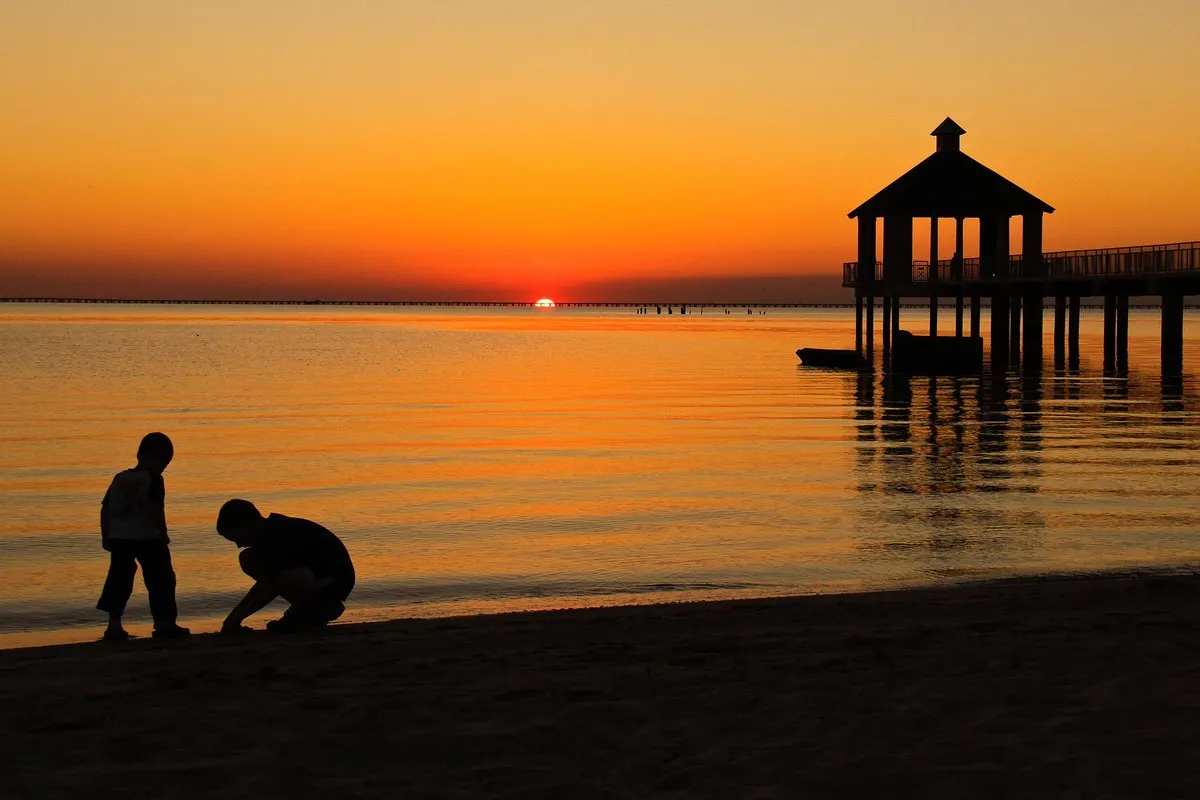
Fontainebleau State Park occupies a narrow peninsula on the north shore of Lake Pontchartrain, about 40 miles north of New Orleans in Mandeville. The park combines a sandy lakefront beach, a network of bayou and marsh trails, and the crumbling ruins of a 19th-century sugar mill, making it one of the more historically and ecologically layered state parks in Louisiana. The landscape is shaped by water in nearly every direction, with Lake Pontchartrain to the south and cypress-edged bayous threading through the interior.
Lake Pontchartrain Beach and Swimming Area
The beach is the main draw for most visitors, particularly families and day-trippers from the New Orleans metro area. The sandy shoreline along the lake offers swimming, sunbathing, and views across the open water. A bathhouse with restrooms and changing facilities serves the beach area. Because Lake Pontchartrain is a brackish estuary rather than a freshwater lake, the water has a slightly different feel than a typical river beach, and conditions can vary with wind and weather. On calm days the lake is quiet and shallow near shore; on breezy days small waves pick up quickly. Swimming is unsupervised, so visitors should use their own judgment about conditions.
Bayou Trails and the Alligator Marsh Boardwalk
Away from the beach, the park’s trail system moves through a much quieter landscape of live oak canopy, cypress edges, and open marsh. The trails wind along Bayou Cane and connect to the Alligator Marsh Boardwalk area; visitors should check current trail and boardwalk status with Fontainebleau State Park before relying on Alligator Marsh Boardwalk access. This is one of the more accessible spots in southeast Louisiana to observe alligators in a wild setting without a boat. The boardwalk also provides good vantage points for wading birds, turtles, and the general activity of a coastal marsh. The trails overall are flat and relatively short, well suited for casual walkers rather than those seeking strenuous hiking.
The Fontainebleau Sugar Mill Ruins
One of the more unusual features of the park is the remains of a sugar mill built in the 1820s on the plantation that once occupied this land. The brick ruins, partially overgrown with vegetation, stand near the lakefront and give the park a sense of deep historical weight that few Louisiana state parks can match. The plantation was established by Bernard de Marigny, a well-known New Orleans figure, and the property eventually passed through several hands before becoming a resort destination and later a state park. Interpretive signage explains the site’s history, including its connection to enslaved labor, which is addressed directly rather than glossed over. The ruins are accessible by foot from the main parking and camping areas.
Camping and Cabins
Fontainebleau is a full-service camping destination with tent and RV sites spread across the park, many of them shaded by mature live oaks. The campground has electrical hookups, water connections, and access to restrooms and shower facilities. The park also offers furnished cabins for visitors who want more shelter. Reservations are strongly recommended during summer weekends and holiday periods, as the park draws heavily from the New Orleans area. Campsites and cabins carry fees beyond the standard entry charge.
Pet Policy
Leashed pets are welcome on the trails and in most outdoor areas of the park. The standard leash rule applies throughout, and owners are responsible for cleaning up after their animals. Pets are not permitted in the swimming area or park buildings; dogs are allowed only in designated pet-friendly cabins, with a fee and a maximum of two dogs per cabin. Given the presence of alligators along the bayou edges and marsh areas, keeping pets close and under control is not just a rule but a genuine safety concern, especially for small dogs near the water.
Wildlife to Be Aware Of
Alligators are present throughout the park’s wetland areas, including along Bayou Cane and in the marsh visible from the boardwalk. They are wild animals that can move quickly on land, and visitors should maintain a safe distance at all times. Never feed alligators, and keep children and pets away from water’s edges where visibility is limited. Cottonmouth water moccasins live in the same wetland and bayou margins and are venomous. Watch where you step when walking near the water, and give any snake you encounter space to move away. Fire ants build mounds in grassy and open areas throughout the park, including near picnic tables and along trail edges. Check the ground before sitting or setting down gear, and treat any stings promptly if you have a sensitivity. Mosquitoes are a persistent presence year-round and can be intense near the marsh in warmer months. Insect repellent is strongly recommended from spring through fall.
Practical Information
Fontainebleau State Park is located at 62883 Hwy. 1089, Mandeville, Louisiana 70448. From New Orleans, cross the Lake Pontchartrain Causeway to Mandeville and follow US-190 east to the park entrance. The park is open year-round, though summer brings peak crowds and the highest mosquito activity. Spring and fall offer the most comfortable conditions for hiking and exploring the ruins. Entry is $3 per person; seniors 62 and older and children 3 and under enter free. Campsite and cabin fees are charged separately. Louisiana State Parks annual passes are accepted for day use and can be purchased at any state park. Reservations for camping and cabins can be made through the Louisiana State Parks reservation system.
Frequently Asked Questions
How much does it cost to enter Fontainebleau State Park?
Entry is $3 per person for visitors ages 4 and older, and children 3 and under get in free. Seniors 62 and older also enter free, and Louisiana State Parks annual passes are accepted.
Are dogs allowed at Fontainebleau State Park?
Leashed dogs are welcome on the trails and in most outdoor areas of the park, though pets are not permitted in the swimming area, inside cabins, or in park buildings. Because alligators are present along the bayou edges and marsh areas, keeping pets close to you and away from the water is strongly advised.
Are there alligators at Fontainebleau State Park?
Alligators are present throughout the park's wetland areas, including along Bayou Cane and in the marsh visible from the Alligator Marsh Boardwalk, where they can commonly be seen resting on muddy banks or floating near the surface. Visitors should maintain a safe distance, never feed them, and keep children and pets away from water edges where visibility is limited.
Can you swim in Lake Pontchartrain at Fontainebleau State Park?
Swimming is available along the sandy beach on Lake Pontchartrain, with a bathhouse offering restrooms and changing facilities nearby. Swimming is unsupervised, so visitors should use their own judgment about conditions, as wind can cause small waves to pick up quickly on the lake.