
Anza-Borrego Desert State Park
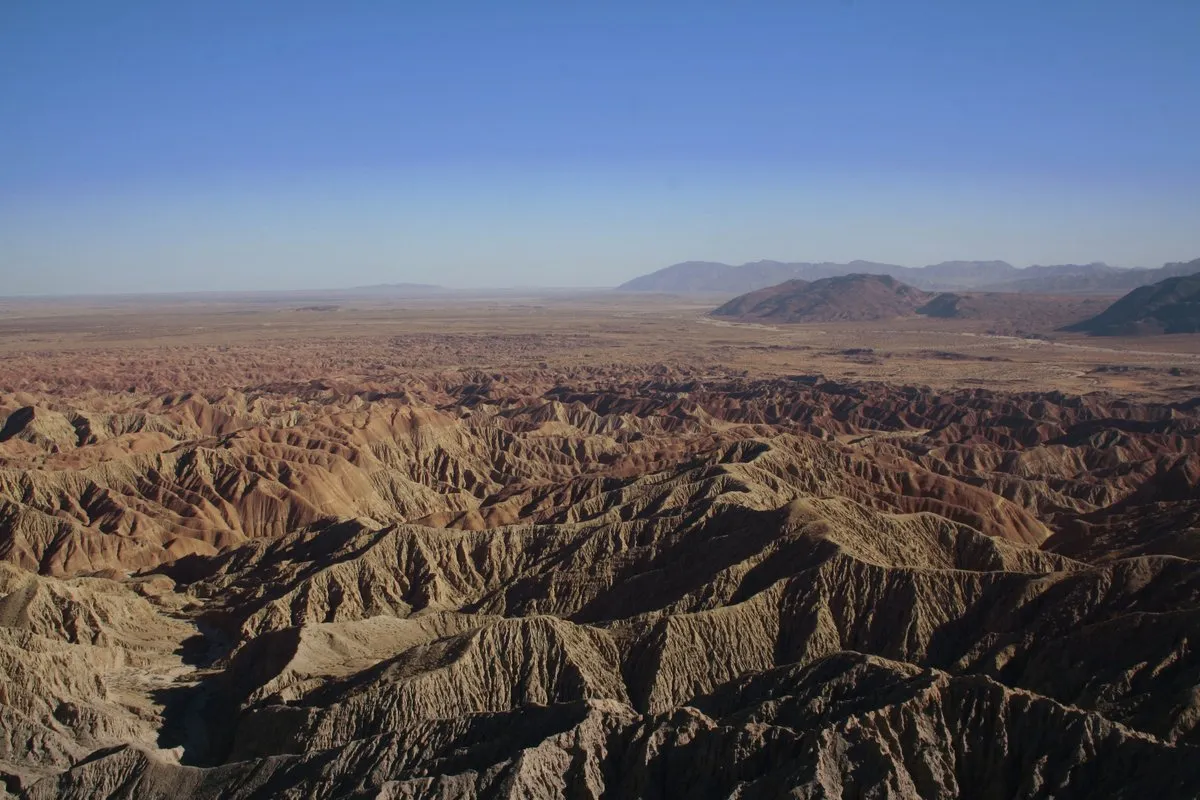
Anza-Borrego Desert State Park stretches across more than 600,000 acres of the Colorado Desert in eastern San Diego County and parts of Imperial and Riverside counties, making it the largest state park in California and the largest state park in the contiguous United States. The park takes its name from Spanish explorer Juan Bautista de Anza and the Spanish word for bighorn sheep. Dramatic badlands, palm-lined canyons, open desert flats, and rugged mountain terrain give the park a landscape that shifts constantly as you move through it. Few places in Southern California offer this combination of size, solitude, and ecological variety.
Wildflowers and Seasonal Blooms
Anza-Borrego draws visitors from across the country during late winter and early spring when wildflowers transform the desert floor. Depending on winter rainfall, the bloom can range from scattered patches to a full carpet of color covering the hillsides and washes. Sand verbena, desert sunflowers, brittlebush, and ocotillo are among the most common species to appear. Peak bloom typically falls between late February and mid-April, though timing varies significantly from year to year. The park offers current bloom updates, an interactive wildflower map, and a wildflower hotline, and rangers can direct visitors to the most active areas. Even in modest years, the flowering season brings a noticeable energy to the landscape.
Slot Canyons and Geology
The park contains some of the most accessible slot canyons in California. Slot Canyon, the Calcite Mine area, and the Palm Wash slots are popular destinations where visitors can walk through narrow passages carved by water moving through ancient sediment. The geology here records millions of years of change, from ancient seabeds to volcanic activity to erosion that continues today. The Fish Creek badlands and the Font’s Point overlook reveal layered formations that expose fossils of prehistoric marine animals and land mammals. Hiking in these areas requires no technical skill, though some routes involve scrambling over boulders and through tight passages.
Wildlife and Stargazing
Peninsular bighorn sheep, the park’s namesake animal, live in the rocky terrain throughout the park. Early morning hikes near Borrego Palm Canyon offer a reasonable chance of spotting them on the hillsides. Roadrunners, coyotes, kit foxes, and a wide variety of raptors and migratory birds are also common. The park holds an International Dark-Sky designation, reflecting its distance from major urban light sources. On clear nights, the Milky Way is visible to the naked eye. The town of Borrego Springs, surrounded entirely by the park, hosts star parties and astronomy events through much of the year, and the open desert provides ample room to set up telescopes far from any light source.
Pet Policy
Pets are allowed in Anza-Borrego Desert State Park but must remain on a leash no longer than six feet at all times. Dogs are permitted in designated campgrounds, on designated park roads where vehicles are allowed, and on the Visitor Center/Campground Trail. They are not allowed in the backcountry, on most hiking trails, in undeveloped areas, or in wildflower fields. This restriction protects wildlife, particularly the bighorn sheep, from stress and potential harassment. Visitors planning to hike should arrange for pets to stay elsewhere.
Practical Information
The park surrounds the small town of Borrego Springs, roughly 90 miles northeast of San Diego. From San Diego, the most common route follows Highway 78 east through Julian, then descends into the desert. The park visitor center sits on Palm Canyon Drive just west of town. Most of the park has no day-use fee — the open desert, backcountry, and the majority of trailheads are free to access. A $10 per vehicle day-use fee applies at the Visitor Center on weekends and at certain popular areas including The Slot and Hellhole Canyon. Developed camping at Borrego Palm Canyon and Tamarisk Grove campgrounds starts at $35 per night, with reservations through ReserveCalifornia. Dispersed backcountry camping is permitted throughout most of the park at no charge. Summer temperatures regularly exceed 110 degrees Fahrenheit, so visits from October through April are strongly recommended.
Wildlife to Be Aware Of
Rattlesnakes are common throughout Anza-Borrego, including three species: Mojave rattlesnake, Sidewinder, and Western Diamondback. Watch where you step along rocky washes, slot canyon approaches, and any brushy areas. Never reach into crevices or under ledges without first checking visually. Scorpions are present throughout the desert and hide under rocks, wood, debris, and inside footwear left outside overnight; always shake out shoes and clothing before putting them on. The park’s namesake animal, the Peninsular bighorn sheep, is a federally listed endangered species. Bighorn are sensitive to stress, especially when approached near water sources. Keep a respectful distance and never attempt to feed or follow them. The single greatest hazard at Anza-Borrego is heat. Daytime temperatures from June through September regularly exceed 110 degrees Fahrenheit and can exceed 120 degrees in the open desert. Dehydration and heat stroke can occur rapidly, and summer hiking on most trails is genuinely dangerous. Plan any outdoor activity for October through April, carry far more water than you think you need, and never hike alone in summer.
Frequently Asked Questions
Is there an entry fee for Anza-Borrego Desert State Park?
Most areas of the park are free to enter, though a $10 per vehicle fee applies at the Visitor Center on weekends and at select popular areas.
Are dogs allowed at Anza-Borrego Desert State Park?
Dogs are welcome in the campgrounds, on designated park roads, and on the Visitor Center and Campground Trail, though they are not permitted on backcountry trails.
When is the best time to see wildflowers at Anza-Borrego?
Peak wildflower bloom typically falls between late February and mid-April, though the timing and intensity vary each year depending on winter rainfall. The park offers a wildflower hotline, an interactive bloom map, and ranger guidance to help visitors find the most active areas.
Are there rattlesnakes or other dangerous wildlife at Anza-Borrego?
The park is home to three rattlesnake species, including the Mojave, Sidewinder, and Western Diamondback, which are most commonly encountered along rocky washes and slot canyon trails. Scorpions are also common under rocks and debris, so visitors should shake out shoes and gear before use.