
Devil's Den State Park
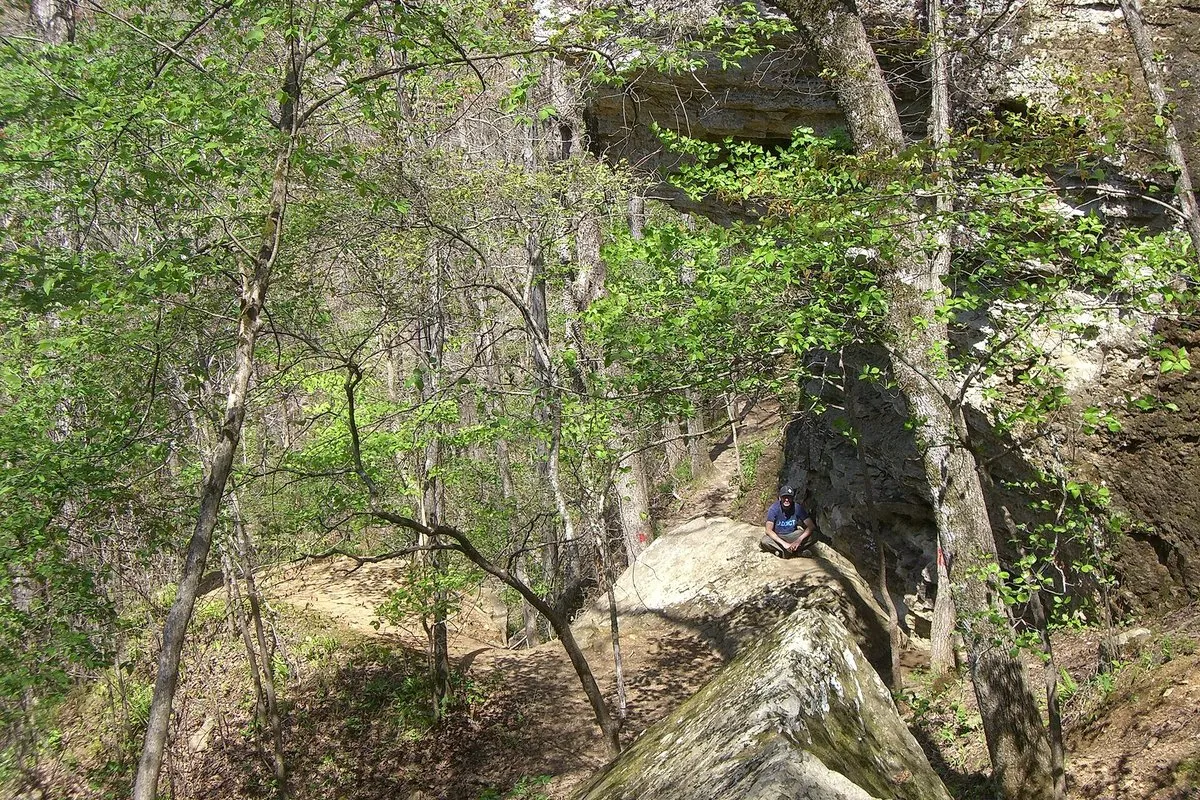
Devil’s Den State Park occupies a rugged stretch of the Boston Mountains in northwest Arkansas, tucked into Lee Creek Valley within the Ozark National Forest. The park takes its name from the dramatic sandstone formations that define the landscape: narrow crevices, boulder caves, and shadowed passages that have drawn curious visitors since the 1930s when the Civilian Conservation Corps first developed the site. That CCC history, combined with genuine geological character and a full range of overnight facilities, makes Devil’s Den one of the most complete state park experiences in Arkansas.
The Caves and Crevices
The geological features are the reason most people come. Devil’s Den itself is a large crevice cave formed by fractures in the sandstone bluff, wide enough to walk through and deep enough to feel genuinely cave-like without requiring any technical equipment or permits. Nearby, the Devil’s Ice Box is a narrower crevice where cool air seeps out even in summer, a product of the rock’s natural insulating properties. Yellow Rock Trail leads to a sandstone overlook above the valley, and the short walk to Twin Falls rewards visitors with one of the more accessible waterfall views in the park. These features are concentrated enough that a focused half-day visit can take in the main geological highlights without rushing.
Hiking and Mountain Biking Trails
Devil’s Den has more than 20 miles of trail divided between hikers and mountain bikers, with enough variety to satisfy both casual walkers and committed riders. The CCC Centennial Trail is the longest option for hikers, winding through hardwood forest and along creek drainages for roughly 15 miles. Shorter loops connect the main cave and waterfall features for visitors who want a two-hour outing. The mountain bike trails are purpose-built with technical features that have earned the park a strong reputation among riders in the region. Trail conditions vary significantly by season, and the bike trails in particular can become slick and rutted after heavy rain, so checking current conditions before arrival is worthwhile.
Camping, Cabins, and CCC History
The overnight infrastructure at Devil’s Den is extensive. The park has tent and RV campsites, and a collection of stone cabins built by the CCC in the 1930s that remain in use today. The cabins are constructed from local sandstone and timber in a style that matches the surrounding landscape, and staying in one puts you close to the geological features after day visitors have left. A lodge, restaurant, and swimming pool operate seasonally, making the park functional as a family destination without requiring guests to bring everything themselves. The CCC construction throughout the park, including bridges, retaining walls, and the cave shelter house, is worth paying attention to as a layer of American Depression-era history woven into the physical site.
Pet Policy
Leashed pets are welcome in most outdoor areas of the park, including trails and campgrounds. The standard leash length rule applies, generally six feet or shorter. Pets are not permitted inside the cave and crevice areas, in rental cabins, or in the swimming pool area. Given the rocky and uneven terrain throughout the park, keeping pets on a short leash is practical as well as required.
Wildlife to Be Aware Of
The rock-heavy terrain at Devil’s Den creates ideal habitat for venomous snakes, and visitors should take that seriously. Copperheads are the most commonly encountered venomous snake in the park and favor exactly the kind of environment the park offers: rocky crevices, shaded cave entrances, and the spaces beneath boulders. They are most active from spring through early fall. Timber rattlesnakes are present as well, typically found along wooded trail corridors and on rocky outcrops, particularly at higher elevations. Both species are defensive rather than aggressive, but the dense rock habitat means encounters can happen at close range with little warning. Watch where you place your hands when climbing on rock surfaces, and look before stepping over logs or into crevices.
Black widow spiders inhabit many of the same cave crevices and shaded rock ledges that make the park interesting. Their webs tend to be irregular and low to the ground or tucked into corners. Wearing gloves when reaching into rock gaps is reasonable precaution.
Black bears are present in the backcountry portions of the park, though sightings are uncommon near the main developed areas. If you are camping, store food in the provided containers or in your vehicle rather than leaving it accessible at a campsite. Bears in Arkansas are generally not habituated to humans, but proper food storage keeps it that way.
Practical Information
Devil’s Den State Park is located at 11333 Arkansas Highway 74 West, near the town of West Fork, Arkansas, roughly 25 miles south of Fayetteville. From Fayetteville, take US-71 south to West Fork and follow Arkansas Highway 74 west into the park. The park road winds through narrow valley terrain, and large RVs should check length restrictions before attempting the route.
There is no general admission fee to enter the park. Camping starts at approximately $15 per night depending on site type, and cabin rentals are available at higher nightly rates through the Arkansas State Parks reservation system. A fee is charged for use of the seasonal swimming pool. The restaurant and lodge operate on a seasonal schedule, generally from spring through fall, and are closed in winter. Reservations for cabins and popular campsites are strongly recommended, particularly on spring and fall weekends when the park sees heavy use.
Frequently Asked Questions
Is there an entry fee to visit Devil's Den State Park?
There is no general admission fee to enter Devil's Den State Park. Camping starts at approximately $15 per night, cabin rentals are available at higher nightly rates, and a separate fee is charged for use of the seasonal swimming pool.
Are dogs allowed at Devil's Den State Park?
Leashed pets are welcome on trails and in campgrounds throughout the park, provided the leash is six feet or shorter. Pets are not permitted inside the cave and crevice areas, in rental cabins, or in the swimming pool area.
Can you swim at Devil's Den State Park?
The park has a seasonal swimming pool that operates generally from spring through fall and charges a separate use fee. Swimming is also possible in the creek areas of the park, though the pool is the designated swim facility on site.
Are there venomous snakes at Devil's Den State Park?
Copperheads and timber rattlesnakes are both present in the park, with copperheads commonly found near rocky crevices and cave entrances and timber rattlesnakes along wooded trail corridors and rocky outcrops. Both species are most active from spring through early fall, so visitors should watch where they place their hands on rock surfaces and look before stepping over logs or into crevices.