
Palo Duro Canyon State Park
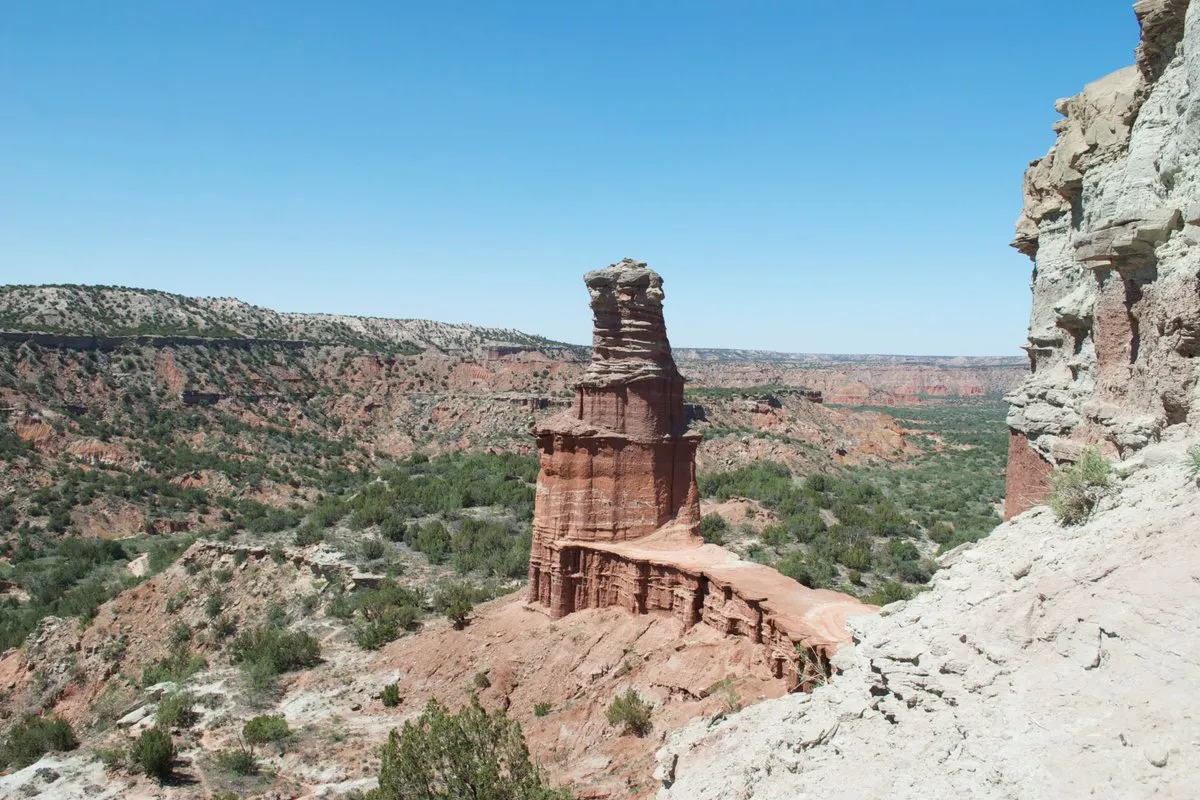
Palo Duro Canyon is the second largest canyon system in the United States, stretching nearly 120 miles across the Texas Panhandle just southeast of Amarillo. Carved by the Prairie Dog Town Fork of the Red River over roughly the last million years, the canyon drops up to 800 feet from the surrounding High Plains. Towering red and orange cliffs, pale yellow caliche formations, and the iconic Lighthouse rock spire make this one of the most visually dramatic landscapes in the state. Texans call it the Grand Canyon of Texas, and while it may not match the scale of its Arizona counterpart, it rewards visitors with a richly colored desert environment that feels worlds away from the flat prairie above.
Geology and Scenery
The exposed rock layers in Palo Duro Canyon tell roughly 250 million years of geological history. The deep red Permian formations at the base give way to lighter Triassic mudstones and sandstones, then to the Miocene to Pliocene Ogallala caprock and younger caliche and sediments near the rim. Erosion continues actively shaping the canyon walls, and visitors who pay attention will notice the subtle shifts in color and texture throughout the day as light angles change. Sunrise and late afternoon tend to bring out the richest reds and pinks in the cliffs.
Trails and Hiking
The park has over 30 miles of trails ranging from easy paved paths to strenuous backcountry routes. The Lighthouse Trail is the most popular, covering about 5.6 miles round trip and leading to the park’s signature 310-foot rock column. It involves moderate elevation changes and some rocky terrain. The CCC Overlook at the Visitor Center offers sweeping canyon views with less effort. Many trails are open to multiple uses, so hikers, mountain bikers, and equestrians will often share the same routes. Trail conditions can become hazardous after rain, as the clay soil turns slippery quickly.
Camping
Palo Duro Canyon offers many camping options on the canyon floor itself, which means waking up surrounded by canyon walls rather than looking down from the rim. Options include tent sites, RV hookups, backpack camping, cabins on the rim and canyon floor, and glamping sites. The Trading Post on the canyon floor provides a general store and basic amenities. Summer nights stay warm, and the canyon floor can run hotter than the rim and the surrounding plains. Spring and fall are the most comfortable seasons for camping. A popular outdoor musical drama called “Texas” has been performed in the canyon amphitheater during summer evenings for decades, drawing large crowds on performance nights.
Pet Policy
Leashed pets are welcome on most trails and in camping areas throughout the park. The leash must be no longer than six feet. Pets are not permitted inside park buildings, the amphitheater, or any cabins and shelters. Owners are required to clean up after their animals. Given the heat during summer months, bringing water for pets is essential, and trail surfaces can become hot enough to damage paw pads.
Wildlife to Be Aware Of
Rattlesnakes, primarily the western diamondback, are common in the canyon’s rocky terrain and along trail edges; watch your step and never reach into crevices or under rocks. Copperheads are also present in shadier, rockier areas. Scorpions are common throughout the park, especially under rocks and around campsites; shake out shoes and check gear before use. Feral hogs occasionally move through the park and should not be approached. In summer, heat and dehydration are a far more frequent hazard than wildlife encounters; rangers respond to more heat-related emergencies than snake bites, so carrying extra water is essential on any trail visit.
Practical Information
Palo Duro Canyon State Park is located at approximately 34.984709 latitude and -101.701867 longitude, about 25 miles southeast of Amarillo. From Amarillo, take I-27 or U.S. 87 south to Canyon, then head east on State Highway 217 to Park Road 5 and the park entrance. The nearest town with full services is Canyon, Texas. The park is open year-round, though summer temperatures regularly exceed 100 degrees Fahrenheit and afternoon thunderstorms are common between June and August. Day use admission is $8 per person for visitors ages 13 and older; children 12 and under are free. Texas State Parks Pass holders enter free. Camping fees are charged separately. Reservations are strongly recommended during spring break, summer weekends, and fall holiday weekends. The Texas State Parks Online Reservations system handles most day use, campsite, and cabin bookings, with phone reservations available as well and a handful of facilities booked through separate channels.
Frequently Asked Questions
How much does it cost to enter Palo Duro Canyon State Park?
Entry is $8 per person for visitors ages 13 and up, and children 12 and under get in free. Texas State Parks Pass holders can use their pass in place of the per-person fee.
Are dogs allowed on the trails at Palo Duro Canyon?
Leashed pets are welcome on most trails and in camping areas, as long as the leash is no longer than six feet. Pets are not permitted inside park buildings, the amphitheater, or any cabins and shelters, and owners must clean up after their animals.
How long is the Lighthouse Trail and is it difficult?
The Lighthouse Trail is about 5.6 miles round trip and is rated moderate, with some rocky terrain and elevation changes along the way. It leads to the park's iconic 310-foot Lighthouse rock spire, making it the most popular hike in the canyon.
What dangerous wildlife should I watch out for at Palo Duro Canyon?
Western diamondback rattlesnakes are common along rocky terrain and trail edges, copperheads can be found in shadier rocky areas, and scorpions are frequently encountered under rocks and around campsites. Feral hogs also move through the park occasionally and should never be approached.