
Fort Adams State Park
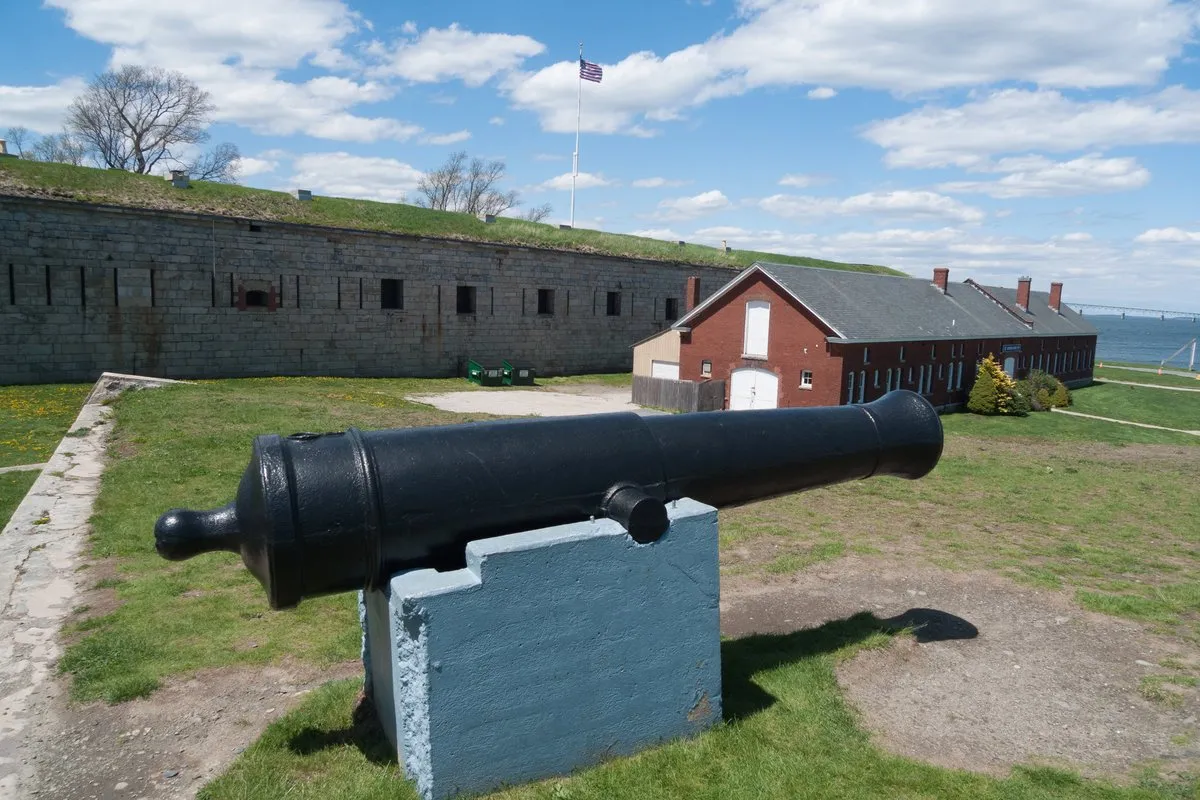
Fort Adams State Park occupies a narrow peninsula on the western edge of Newport Harbor, where the waters of Narragansett Bay open up toward the Atlantic. The park centers on one of the largest coastal fortifications ever built in the United States, a massive stone structure that took decades to construct and served the nation’s coastal defense from the early 19th century through World War II. The combination of military history, working harbor access, and sweeping water views makes this park unlike anything else in Rhode Island.
The Fort and Its History
The fort itself is the reason most visitors come. Construction began in 1824 and continued for roughly three decades, resulting in a fortification capable of housing over a thousand soldiers and mounting hundreds of cannons. The sheer scale of the stonework, the miles of interior corridors, the casemates, and the surviving earthworks are genuinely impressive. The Fort Adams Trust manages tours of the interior, and guided tours are strongly recommended for first-time visitors who want to understand the engineering and strategic thinking behind the design. Without a tour, access to the interior structures is limited, but walking the exterior grounds and earthworks is free and worth considerable time on its own.
Newport Harbor Views and Waterfront Access
The park’s location on the harbor gives it some of the best water views in Newport. From the grassy areas along the shoreline, visitors can watch a constant parade of sailboats, ferries, kayaks, and working vessels moving in and out of the harbor. The park includes boat ramp access and pier facilities, making it a practical launch point for those arriving or departing by water. Anglers fish from the shoreline and along the rocks, targeting striped bass, bluefish, tautog, and other species common to Narragansett Bay. No park-specific fishing permit was found, but recreational saltwater anglers must comply with Rhode Island marine fishing licensing and registration requirements and current size, season, and possession limits.
Festival Grounds and Events
Fort Adams is internationally recognized as the home of the Newport Folk Festival and the Newport Jazz Festival, two of the longest-running and most respected music festivals in the world. Both events are held on the park grounds in summer, typically in late July and early August. During festival weekends, the park operates under different access rules and ticket requirements entirely separate from normal park admission. Outside of festival season, the open grounds where the stages are erected make for excellent open space for walking, kite flying, and taking in the harbor views without crowds.
Picnicking and Open Grounds
The park has picnic areas with tables and grills spread across the grounds, and the open lawn areas are popular with families on warm weekends. The grass fields near the waterfront fill up on summer afternoons, so arriving earlier in the day helps secure a good spot. There are restroom facilities available during the operating season.
Pet Policy
Leashed pets are allowed in appropriate park areas, but the leash may not exceed six feet, pets are not allowed on state bathing beach areas from April 1 through September 30 except service animals, and pets are not allowed in buildings or fort tour areas unless otherwise permitted. Dogs must remain under control on a leash no longer than six feet. Pets are not permitted inside the fort structures during tours. Owners are expected to clean up after their animals, and visitors should bring their own waste disposal bags and clean up and dispose of waste properly.
Wildlife to Be Aware Of
Ticks are present throughout the grassy and lightly wooded areas of the park and are active from early spring through late fall. Before visiting, use EPA-registered insect repellent such as DEET or picaridin on exposed skin, and use 0.5% permethrin only on clothing and gear according to the product label. Wear long pants tucked into socks when walking through grass or low vegetation, and perform a thorough tick check after leaving the park. Lyme disease and other tick-borne illnesses are real concerns in Rhode Island, and prompt removal of any attached tick matters.
Seagulls are a persistent presence along the waterfront and near picnic areas. They are bold and will move toward unattended food quickly. Keep food covered when you are not actively eating, and do not feed them. A seagull that is fed or rewarded with scraps becomes more aggressive, which creates problems for other visitors nearby.
Jellyfish appear in Narragansett Bay during the summer months, particularly in warmer water conditions. Anyone wading or swimming near the park should be aware that contact with jellyfish tentacles causes a painful sting. Look before entering the water and avoid handling any jellyfish encountered on the shoreline, as even beached individuals can sting.
Practical Information
Fort Adams State Park is in Newport, Rhode Island, off Harrison Avenue and Fort Adams Drive. The Fort Adams Trust and visitor information sources commonly list the address as 90 Fort Adams Drive, Newport, RI 02840. From downtown Newport, follow Thames Street south and then continue onto Harrison Avenue, following signs toward Fort Adams. The park is roughly two miles from the center of Newport.
General day-use park admission and ordinary day parking are typically free, but fees apply for fort tours, overnight parking, rentals and reservations, special events, and festival access. Check the Fort Adams Trust website for current tour schedules and pricing before visiting, as hours vary by season.
The park is open year-round, though facilities and tour availability are concentrated between late spring and early fall. Summer weekends are the busiest period, and parking can fill up quickly on pleasant afternoons. Arriving before midday on peak days helps avoid the worst congestion. During Newport Folk and Jazz Festival periods, access to much of the park and the festival grounds is restricted or ticketed and normal public use may be limited, so checking the DEM, Fort Adams, and festival calendars and access notices before planning a visit around that time is worth the effort.
Frequently Asked Questions
Is there an admission fee to enter Fort Adams State Park?
General park admission and parking are free for all visitors. Guided tours of the fort interior are operated by the Fort Adams Trust and carry a separate fee, so checking their website for current pricing before your visit is recommended.
Are dogs allowed at Fort Adams State Park?
Leashed dogs are welcome throughout the park grounds at all times. Pets are not permitted inside the fort structures during tours, and owners are expected to clean up after their animals, with waste bags and receptacles available near the main entrance.
Where can I find tide charts for Fort Adams State Park?
NOAA provides tide predictions for Newport Harbor, the closest reference station to Fort Adams, at tidesandcurrents.noaa.gov. Tide timing is worth checking if you plan to fish the shoreline rocks, launch from the boat ramp, or wade near the water, as conditions in Narragansett Bay shift noticeably with the tide.
Is Fort Adams State Park closed during the Newport Folk and Jazz Festivals?
The park is closed to general visitors during festival weekends in July and August, when the Newport Folk Festival and Newport Jazz Festival take over the grounds under entirely separate ticketing. Checking the festival calendar before planning a visit during that period is strongly advised.