
Cherry Springs State Park
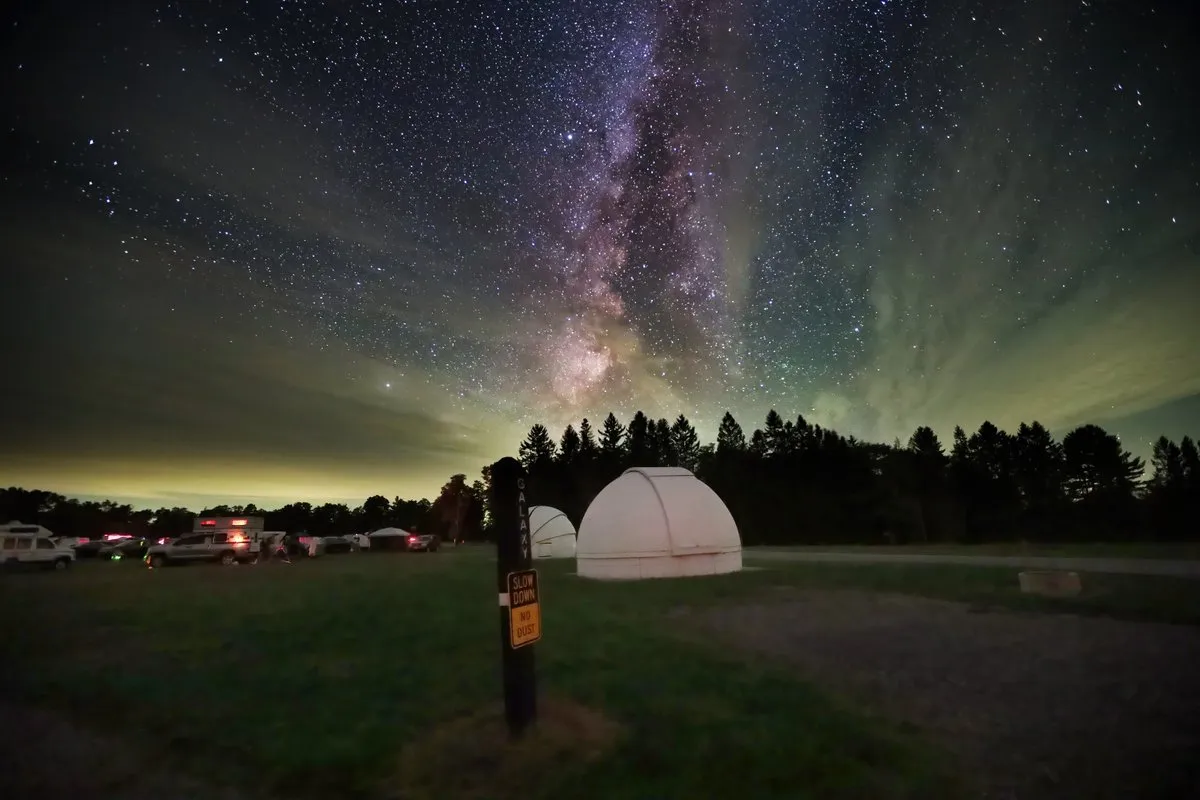
Cherry Springs State Park sits in Potter County in north-central Pennsylvania, deep within Susquehannock State Forest. At 2,300 feet in elevation and surrounded by miles of undeveloped forest, the park has earned international recognition as one of the darkest night sky locations on the entire East Coast. The International Dark-Sky Association has designated it a Gold-Tier International Dark Sky Park, a distinction shared by only a handful of places in the world. People travel from across the country and beyond specifically to observe the Milky Way here with the naked eye. That singular quality shapes everything about the park.
Stargazing and the Astronomy Observation Fields
The main draw at Cherry Springs is the night sky, full stop. The park maintains two dedicated astronomy areas: a public stargazing field open to all visitors and a separate Overnight Astronomy Field reserved for those with advance permits. On a clear, moonless night, the Milky Way is visible as a dense, textured band stretching across the sky, not just a faint smear. Thousands of stars are distinguishable to the naked eye, and planets, meteor showers, nebulae, and star clusters come into sharp relief through binoculars or a telescope.
The Overnight Astronomy Field requires a reservation through the Pennsylvania DCNR system. Visitors use it specifically for extended observing sessions from late evening into the early morning hours. Red-light-only rules are strictly enforced in this area to protect night vision for everyone present. White lights, including phone screens pointed upward, are prohibited. Arriving before dark and orienting yourself to the field layout during twilight is strongly recommended. The Pennsylvania Wilds hosts annual star parties and astronomy events at the park, drawing amateur astronomers and astrophotographers from across the region.
Conditions vary significantly by season. Summer weekends, particularly around new moons, draw the largest crowds. Fall offers excellent transparency and cooler temperatures that many astronomers prefer. Winter observing is possible but requires serious preparation for cold, and some facilities may be limited.
Rustic Camping
The campground at Cherry Springs is entirely primitive. There are no hookups, no showers, and no flush toilets. Vault toilets and a hand pump or water source are available, but visitors should verify current water availability with DCNR before arrival and bring their own supply as a backup. Tent sites are spread through the forested area adjacent to the observation fields.
The campground is intentionally low-impact. This is not a destination for recreational vehicle camping or for visitors expecting developed amenities. What it offers instead is quiet, dark nights, clean forest air, and a level of solitude that more developed campgrounds rarely provide.
Trails and Forest Exploration
Several trails wind through the forested terrain surrounding the park. The routes pass through mixed hardwood and conifer forest typical of the northern Pennsylvania highlands. Elevation changes are moderate, and the trails are suitable for hikers of varying experience levels. The forest is worth exploring during the day, both as its own experience and as preparation for a night of stargazing: knowing the layout of the area in daylight helps after dark.
Trails here are lightly used compared to parks closer to urban centers. Visitors looking for solitude on foot will generally find it. Mountain biking is permitted on designated forest roads in the surrounding Susquehannock State Forest, expanding the options for active daytime use significantly.
Pet Policy
Pets are welcome at Cherry Springs State Park and must be kept on a leash no longer than six feet at all times. Owners are responsible for cleaning up after their animals. Pets are allowed on trails and in the campground. However, given the nighttime focus of the park and the shared nature of the astronomy fields, keeping pets calm and under close control during observing sessions is essential out of consideration for other visitors.
Wildlife to Be Aware Of
Black bears are present throughout the park and surrounding forest. Food, cooking equipment, coolers, and any scented items including toiletries must be stored securely when not in use. Bear canisters or hanging food from a tree at a proper distance from your sleeping area are both acceptable methods. Never leave food in a tent or unattended at a campsite. Encounters are uncommon when food is managed responsibly, but the bear population in this region is active.
White-tailed deer are frequently visible near meadow edges and along trails, especially around dawn and dusk. They pose no direct threat but can appear suddenly on forest roads, so drive attentively at low speeds, particularly after dark when you will likely be out and moving around.
Rattlesnakes and copperheads are both present in this region of Pennsylvania and may be encountered in rocky forest terrain. Watch carefully where you place your hands and feet, especially when stepping over logs or navigating off-trail areas. Most snake encounters end without incident when people simply give the animal space and back away slowly.
Ticks are common throughout the grassy and wooded areas of the park from spring through fall. Wearing long sleeves and pants, using insect repellent, and performing a thorough full-body tick check after any outdoor activity significantly reduces your risk. Remove any attached tick promptly and correctly.
Practical Information
Cherry Springs State Park is located at 4639 Cherry Springs Road, Coudersport, Pennsylvania. The nearest town with services is Coudersport, roughly 20 miles to the south via Route 44. The approach roads are rural and may be narrow in sections. GPS navigation works, but confirming the route in advance is worthwhile.
There is no day-use entry fee to visit the park. Rustic tent camping fees apply for overnight stays, and use of the Overnight Astronomy Field requires a separate reservation. Current rates and reservation availability are listed through the Pennsylvania DCNR reservation system. Reservations for popular summer and fall new moon weekends fill quickly, often months in advance. Walk-in availability during those periods is limited.
Frequently Asked Questions
Is there an entry fee to visit Cherry Springs State Park?
There is no day-use entry fee to visit Cherry Springs State Park, though rustic tent camping fees apply and the Overnight Astronomy Field requires an advance reservation through the Pennsylvania DCNR system at current posted rates.
Can I bring my RV to Cherry Springs State Park for stargazing?
Cherry Springs State Park is not suited for RV camping, as the campground is entirely primitive with no hookups, no showers, and no flush toilets, making it a destination for tent campers only.
Are there any wildlife safety concerns I should know about before visiting?
Black bears are active throughout the park and all food and scented items must be secured at camp, and visitors should also watch for rattlesnakes and copperheads in rocky forest areas, check for ticks after any outdoor activity, and stay alert for white-tailed deer near trails especially at dawn and dusk.
Are dogs allowed at Cherry Springs State Park?
Pets are welcome and must be kept on a leash no longer than six feet at all times. Leashed dogs are allowed on trails and in the campground. Given the shared nature of the astronomy fields, keeping pets calm and under close control during nighttime observing sessions is essential.