
Roman Nose State Park
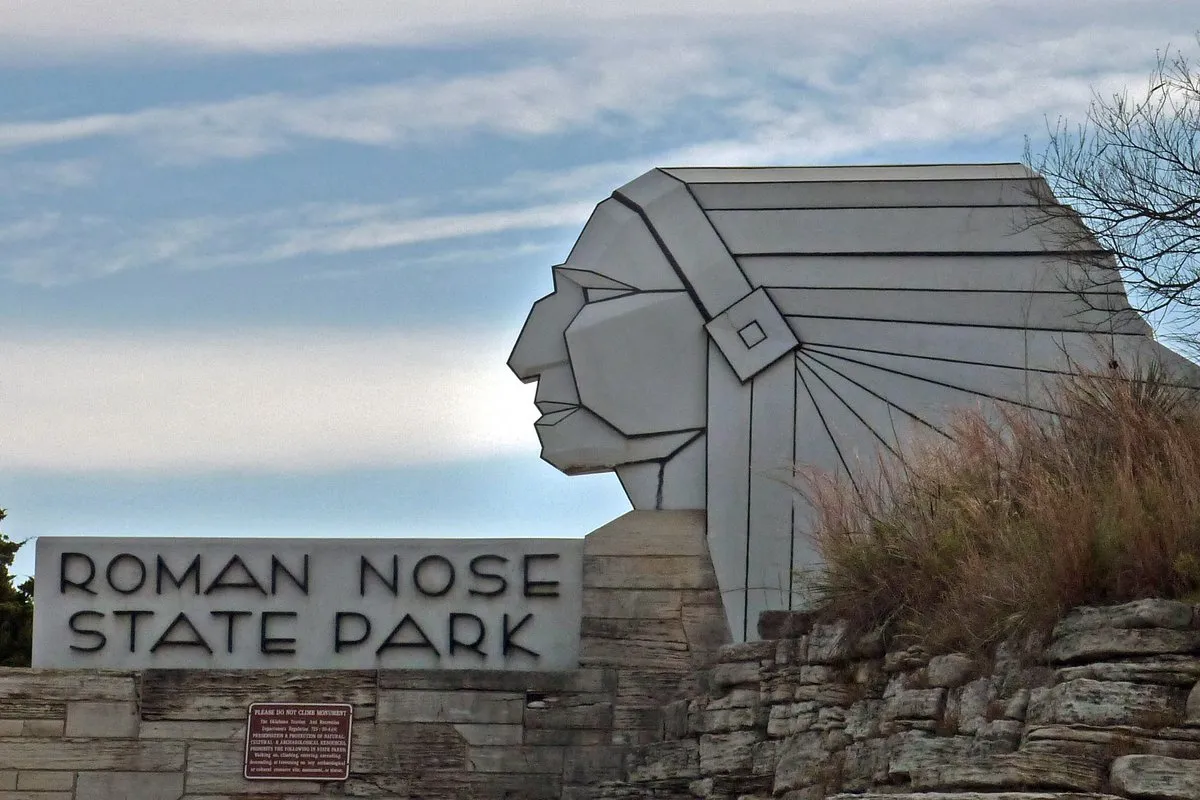
Roman Nose State Park occupies a dramatic stretch of red canyon country in western Oklahoma, about seven miles north of Watonga in Blaine County. The park takes its name from Henry Roman Nose, a Cheyenne leader whose people camped in these canyons during the late 1800s. What sets this park apart from most Oklahoma state parks is the geology: gypsum and red cedar canyons cut through rolling plains, fed by cold natural springs that have supplied water here for centuries. The result is a landscape that feels genuinely surprising for the southern Great Plains, with white and rose-colored cliffs, canyon floors thick with vegetation, and spring-fed water and seasonal trout fishing, typically stocked during the Nov. 1 through March 31 trout season when conditions and dam repairs allow.
Spring-Fed Trout Fishing and Swimming
The spring-fed lake at Roman Nose is the centerpiece of the park and the main reason many visitors make the drive out. Trout stocking is seasonal, generally Nov. 1 through March 31, subject to current ODWC and park conditions. ODWC stocks trout seasonally at the Roman Nose/Lake Watonga-Boecher trout area when conditions allow; check current ODWC stocking and park closure notices before planning a trout-fishing trip. A valid Oklahoma fishing license is required unless exempt; no separate trout license or stamp is required. The park has seasonal swimming pools; lake swimming and swim beaches are not permitted. Paddleboats and canoe rentals have historically been available at the park, so check current availability when planning your trip.
Canyon Trails and Gypsum Cliff Country
Hiking at Roman Nose means walking through the canyon system that defines the park. The trails wind past gypsum formations, cedar groves, and the natural springs that feed the lake. The terrain is not technically demanding, but the canyon walls and rocky stretches require solid footwear, and the trails can become slippery when wet. Some Roman Nose trail segments and trailheads are currently closed; hikers should check current park alerts and use open access routes, including access from the lodge where applicable. Early morning is the best time to hike, both for cooler temperatures and for birdwatching along the spring-fed creek corridors, where warblers, herons, and wild turkey are commonly seen.
Golf Course
Roman Nose has an 18-hole, par-70 golf course that draws players from across western Oklahoma. The course plays through varied terrain, including canyon views unusual for a rural Oklahoma golf facility. Green fees are modest, and the course is open to the public. Clubs can be rented on site. Golf is generally listed as a year-round activity, but visitors should confirm tee times and current hours before visiting.
Horseback Riding and Trail Access
The park maintains equestrian trails and has historically offered horseback riding rentals. Horseback riding is on designated multi-use trails where allowed; consult the current trail map and closures. Riders get a different perspective on the gypsum cliffs and cedar canyon country than hikers do, covering more ground across the open sections of the park. If you plan to bring your own horse, contact the park in advance to confirm current trailer parking and trail access arrangements.
Camping and Cabins
Camping at Roman Nose ranges from basic tent sites to full-hookup RV sites and a set of rustic stone cabins originally built by the Civilian Conservation Corps in the 1930s. The CCC cabins are worth booking in advance; they sit in the canyon and provide a much better base for exploring the park than the standard campground. Cabin and campsite reservations can be made through the Oklahoma State Parks reservation system. Fees vary by site type and season.
Pet Policy
Pets must be leashed, caged, confined, or otherwise restrained; leashes may not exceed 10 feet. Pets are allowed in pet-friendly cabins at Roman Nose; all cabins are pet friendly except the Pioneer Cabin. Pets are not allowed in the lodge except service animals, or in other designated swim areas. Clean up after your pet throughout the park.
Wildlife to Be Aware Of
The canyon terrain and rocky cliff areas are rattlesnake habitat, particularly in warm months from spring through early fall. Rattlesnakes, including western diamondbacks, may be present in the park. Stay on marked trails when hiking near the gypsum cliffs, watch where you step and where you place your hands, and give any snake you encounter a wide berth. Copperheads are found in the wetter, more sheltered areas of the park, especially in the wooded creek corridors and around the natural springs where hikers tend to move slowly and crouch close to the ground. Both species are venomous, and caution around rocky or brushy ground is warranted throughout the warmer half of the year.
Ticks are a serious and consistent concern at Roman Nose. Deer ticks and lone star ticks are common in the tall grass and wooded sections, and exposure risk is present any time you leave paved or well-cleared surfaces. Wear long pants tucked into socks, use insect repellent containing DEET or permethrin on clothing, and do a thorough tick check on yourself, children, and pets after every outing in the park.
Practical Information
Roman Nose State Park is located at 3236 State Highway 8A, Watonga, Oklahoma 73772, approximately seven miles north of Watonga. From Oklahoma City, take US-270 west to Watonga and follow the signs north on State Highway 8A. The nearest services including gas, groceries, and lodging are in Watonga.
There is no day-use entry fee to visit the park. Camping fees vary by site type, from primitive tent camping to full-hookup sites and CCC cabin rentals. Oklahoma offers annual parking passes for parks that charge parking fees; camping and lodging fees are separate. Reservations for campsites and cabins can be made through the Oklahoma State Parks website. The park is open year-round, though some amenities including the swim pools, golf course, and boat rentals operate on a seasonal schedule. Contact the park office at 405-295-2770; use current TravelOK/Oklahoma State Parks listings for department-specific numbers, to confirm current hours and availability before your visit.
Frequently Asked Questions
Is there an entry fee to visit Roman Nose State Park?
There is no day-use entry fee to visit Roman Nose State Park, though camping fees vary by site type and an annual Oklahoma State Parks pass is available for frequent campers.
Are dogs allowed at Roman Nose State Park?
Dogs and other pets are welcome at Roman Nose State Park and must be kept on a leash no longer than six feet at all times, though they are not permitted inside cabin interiors, at the swim beach, or in other designated swim areas.
Are there snakes at Roman Nose State Park?
Rattlesnakes are present in the rocky canyon areas and along the gypsum cliff trails, particularly from spring through early fall, and copperheads can be found in the wooded creek corridors and around the natural springs, so staying on marked trails and watching where you step is strongly advised.
Does Roman Nose State Park have cabins, and how do you book them?
The park offers 11 rustic stone cabins originally built by the Civilian Conservation Corps in the 1930s, and reservations can be made through the Oklahoma State Parks reservation system, with the canyon-situated CCC cabins recommended to book well in advance.