
Indiana Dunes State Park
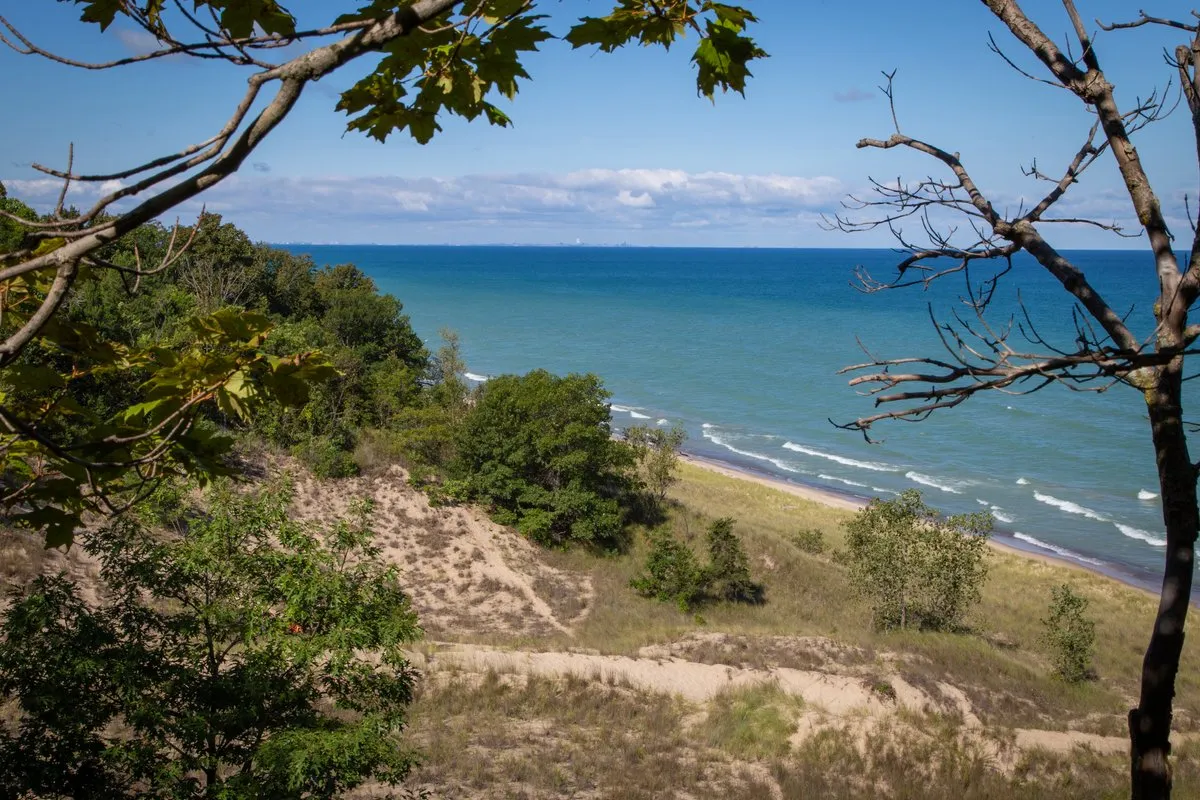
Stretching along the southern shore of Lake Michigan in northwestern Indiana, Indiana Dunes State Park covers 2,182 acres of shoreline, towering sand dunes, wetlands, and forest. The park is enclosed by Indiana Dunes National Park but operates independently as a state facility, offering a more intimate and well-developed experience. What sets it apart is the dramatic contrast packed into a small area: enormous active dunes rising nearly 200 feet above the lake, a wide swimming beach, and an unexpected variety of plant communities that have drawn naturalists since the early twentieth century.
The Dunes and Lake Michigan Beach
The beach and dunes are the reason most people come here, and they deliver. The main swimming beach runs along a generous stretch of Lake Michigan shoreline, with lifeguards on duty during summer months. The water is clear and cold, and the views north across the lake can feel almost oceanic on clear days.
Behind the beach, the dunes rise steeply. Mount Tom, Mount Holden, and Mount Jackson are the three tallest dunes, and trails connecting them give visitors a genuine physical challenge along with sweeping views of the lake and the surrounding landscape. The sand is deep and loose in places, so footing requires attention. The dunes are fragile, and visitors are asked to stay on designated trails to prevent erosion that can take decades to reverse.
Trails Through Uncommon Terrain
The park has about 16 miles of marked trails, and the variety they cover is genuinely unusual. Within a short distance, a hiker can move from open blowout dunes to black oak savanna to sedge marsh to beech-maple forest. This ecological compression made the dunes famous in botanical and ecological circles long before the park was established.
Trail 9, a loop of roughly 3.75 miles, is one of the more demanding routes, climbing and descending dune faces with significant elevation change for flat Indiana. Trail 2 offers an easy 3-mile walk through forested inland terrain. Most trails are well-marked, though sandy sections can obscure path edges after wind or heavy use. Hiking poles are helpful on the steeper dune climbs.
Camping at Indiana Dunes
The campground at Indiana Dunes State Park is among the most popular in the state, and reservations fill quickly, especially on summer weekends and holidays. The campground offers 140 sites with electric hookups, restroom facilities, and shower access. A rent-a-camp option provides basic gear for visitors who want to try camping without bringing their own equipment. Tent campers and RV users share the facility, so the campground can feel busy during peak season. Reservations are strongly recommended and can be made through the Indiana state park reservation system.
Pavilion, Picnicking, and Year-Round Use
A large beach pavilion near the main parking area includes a concession stand, changing facilities, and restrooms. Picnic areas are spread through the park and fill up on warm-weather weekends. The park is open year-round, and winter visits have their own appeal. Ice formations along the shoreline can be dramatic, the trails are far less crowded, and the dune landscape looks entirely different under snow. Cold-weather visitors should dress in layers and check trail conditions before heading out, as some facilities close in the off-season.
Pet Policy
Leashed pets are welcome in most areas of the park, including trails and picnic areas. Pets are not permitted on the swimming beach. The leash length limit is six feet. Owners are responsible for cleaning up after their animals. Given the tick population throughout the park, pets should be checked carefully after any time on trails or in vegetation.
Wildlife to Be Aware Of
Ticks are present throughout the park on all trails and in any brushy or grassy vegetation. They are active from early spring through late fall, and the risk of Lyme disease is real in this region. Wearing long pants tucked into socks, using repellent containing DEET or permethrin, and doing a thorough full-body check after every visit are practical steps that should not be skipped.
Coyotes live throughout the park and are occasionally spotted near trails and at the edges of the campground, particularly at dawn and dusk. They are not considered dangerous to healthy adults, but visitors should never feed them or attempt to approach them. Food should be secured at campsites to avoid attracting them.
Near the wetland and marshy areas of the park, biting insects and mosquitoes can be heavy, especially in summer. Repellent is worth applying before entering these sections, even for short walks. Long sleeves help in the most active areas.
Copperhead snakes and other snake species are possible in dune and woodland terrain. The likelihood of an encounter is low, but snakes use sunny spots on and near trails to warm themselves. Watching where you step, avoiding tall grass off-trail, and not reaching under rocks or logs without looking are sensible precautions.
Practical Information
Indiana Dunes State Park is located at 1600 North 25 East in Chesterton, Indiana, near the coordinates 41.6364, -87.0631. Chesterton is the nearest town and has restaurants, gas, and lodging within a few miles of the park entrance. U.S. Highway 12 and Indiana Highway 49 provide the main access routes. The South Shore Line commuter rail stops in Dune Park, making the park one of the few in Indiana accessible without a car.
Entry fees are collected every day including holidays. Indiana-registered vehicles pay $7 per day. Out-of-state vehicles pay $12 per day. Annual passes are available and offer good value for frequent visitors. Camping reservations should be made well in advance for summer weekends through the Indiana DNR reservation portal.
Frequently Asked Questions
What is the entry fee for Indiana Dunes State Park?
Indiana vehicles pay $7 per day and out-of-state vehicles pay $20 per day, with annual passes available and fees collected every day including holidays.
Are dogs allowed at Indiana Dunes State Park?
Leashed pets are welcome in most areas of the park, including trails and picnic areas.
Is there camping at Indiana Dunes State Park?
The campground offers over 140 electric hookup sites with restrooms and showers, and reservations are strongly recommended as spots fill quickly on summer weekends and holidays.
Are there dangerous animals or wildlife hazards at Indiana Dunes State Park?
Ticks are present on all trails and in vegetation and carry Lyme disease risk, so visitors should check thoroughly after their visit, and copperhead snakes are also possible in dune and woodland areas, so watching where you step is advised.