
Tallulah Gorge State Park
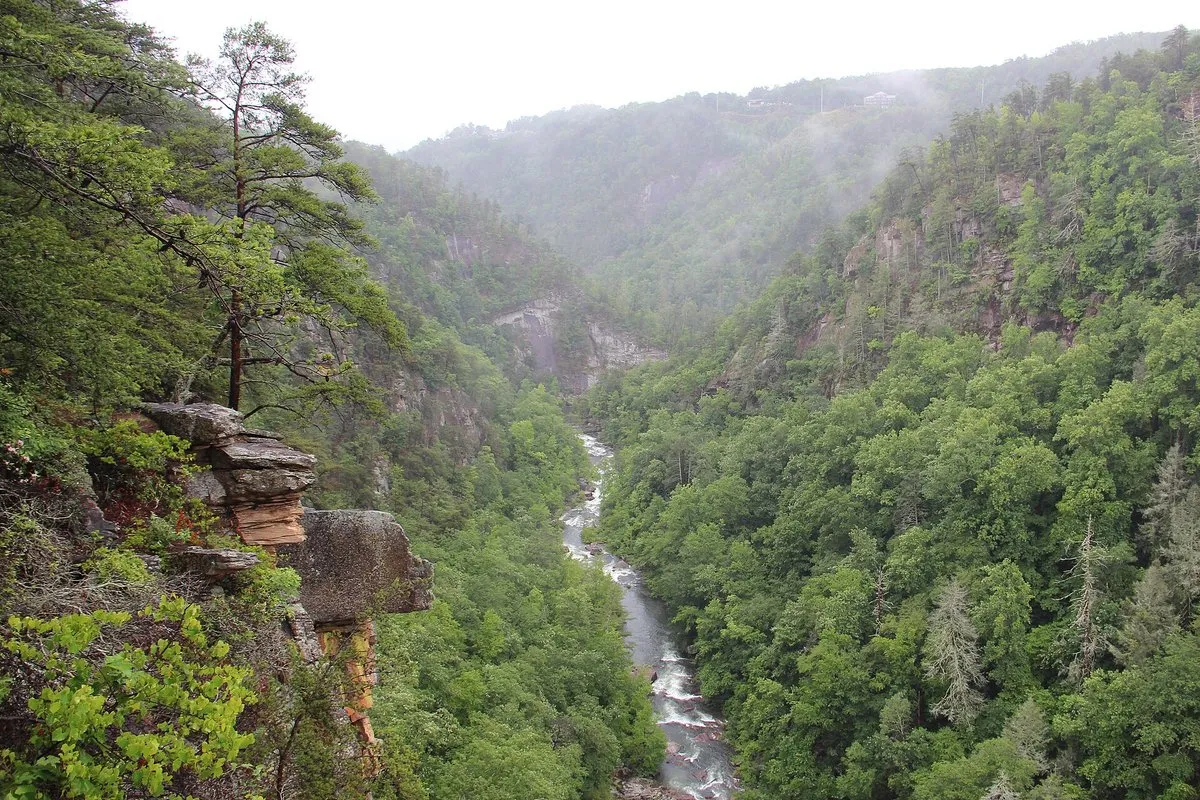
Tallulah Gorge cuts nearly 1,000 feet deep through the southern Blue Ridge Mountains in northeast Georgia, stretching almost two miles in length. Carved by the Tallulah River over millions of years, the gorge exposes ancient quartzite walls and drops through a sequence of waterfalls that drew tourists here as far back as the 1880s. Today the state park protects this geological landmark and offers a rare combination of dramatic scenery, regulated gorge-floor access, and camping within an hour of several major northeast Georgia communities.
The Gorge and Its Waterfalls
The gorge itself is the reason people come. Five waterfalls tumble through the chasm, including Tempesta, Bridal Veil, and Hurricane Falls, with views available from the suspension bridge and overlooks along the rim. The most dramatic view comes from the suspension bridge that crosses 80 feet above the rocky bottom on the Hurricane Falls Loop. From the bridge, the vertical walls rise around you and the sound of the river fills the canyon. Gorge-floor permits are free but strictly limited to 100 visitors per day, and they go quickly on weekends. Pick one up at the Jane Hurt Yarn Interpretive Center on the day of your visit. Permits are issued after a required safety briefing, currently scheduled at 8 a.m., 10 a.m., and noon while permits last. The trail is not recommended for hikers aged 8 or younger, and all hikers must be in good physical condition.
Rim Trails and the North and South Rim Experience
Two rim trails run along opposite sides of the gorge, and together they make a route of about three miles round trip. The trails are mulched and uneven in places, with exposed roots, but accessible to most hikers with reasonable fitness. The North Rim trail offers the better sequence of overlooks, while the South Rim passes through more forested terrain. Both sides provide views down into the gorge at multiple points, and the rim trails are open to all visitors without a permit. Trail surfaces can be slippery when wet, and the exposed rock along the rim warrants caution near edges.
Camping at Tallulah Gorge
The campground sits on the south side of the park near Tallulah Falls Lake, a small reservoir formed by an early 20th-century hydroelectric dam. Campsites include both tent and RV-friendly options with electrical hookups at select sites. The setting is wooded and reasonably quiet outside of peak summer weekends. Campers have access to restrooms, showers, and a dump station. Reservations are strongly recommended from late spring through fall. The campground is a practical base for spending multiple days exploring both the gorge and the surrounding Tallulah Falls area.
Pet Policy
Leashed pets are welcome on the rim trails and in the campground. The gorge floor, Sliding Rock Trail, and Hurricane Falls staircase to the suspension bridge are off-limits to pets, including dogs. Keep pets on a leash no longer than six feet at all times. Given the presence of venomous snakes along rocky trail sections, keep dogs close and out of rock crevices and brush, particularly during warm months.
Wildlife to Be Aware Of
Timber rattlesnakes and copperheads are both present in the park and are most active from spring through early fall. Rocky outcrops, crevices, and trailside brush along the gorge rim and floor are the areas of highest concern. Watch where you step and place your hands, and give any snake you encounter space to move away. Neither species is aggressive by nature, but bites do occur when people step on or startle them.
Black bears range through the park and the surrounding area. Do not approach bears under any circumstance, and never feed them intentionally or accidentally. Store all food, trash, and scented items in a hard-sided vehicle or secured camper when camping. A fed bear becomes a problem bear, and encounters can escalate quickly if an animal has learned to associate people with food.
Heat on the gorge floor is a genuine safety concern in summer. The strenuous descent and climb can become dangerous in hot, humid weather, especially with fatigue and dehydration. The park restricts stair access into the gorge when the heat index reaches the National Weather Service’s Extreme Caution category. Check conditions before your visit in July and August, carry more water than you think you need, and plan gorge-floor descents for early morning when temperatures are lower.
Practical Information
Tallulah Gorge State Park is located at 338 Jane Hurt Yarn Drive in Tallulah Falls, Georgia, approximately 90 miles northeast of Atlanta. Take US-441 north through Clayton or south from the North Carolina border. The town of Clayton, about 12 miles north, is the closest hub for gas, lodging, and supplies.
Parking costs $10 per vehicle for a daily ParkPass. Gorge-floor permits are free and available at the interpretive center on a first-come, first-served basis, issued after scheduled safety briefings at 8 a.m., 10 a.m., and noon while supplies last. Camping rates vary by site type and date. Reservations can be made through the Georgia State Parks reservation system online or by phone.
The park is open year-round. Summer weekends are the busiest period, and gorge-floor permits are often gone by mid-morning. Visiting on a weekday or arriving at opening significantly improves your chances. Fall brings color to the rim trail canopy and slightly cooler gorge-floor temperatures.
Frequently Asked Questions
Are dogs allowed at Tallulah Gorge State Park?
Leashed dogs are welcome on the rim trails and in the campground, but pets are not permitted on the gorge floor, the Sliding Rock Trail, or the Hurricane Falls staircase to the suspension bridge.
How much does it cost to visit Tallulah Gorge State Park?
Parking costs $5 per visit, gorge-floor permits are free but limited to 100 per day, and campsites start at $25 per night.
How do I get a permit to hike to the bottom of the gorge?
Free gorge-floor permits are issued on the day of your visit at the Jane Hurt Yarn Interpretive Center following a required safety briefing, offered at 8 a.m., 10 a.m., and noon while permits last.
Are there venomous snakes at Tallulah Gorge?
Timber rattlesnakes and copperheads are present throughout the park and are most active from spring through early fall, particularly around rocky outcrops, crevices, and trailside brush along both the rim and gorge floor.