
Providence Canyon State Park
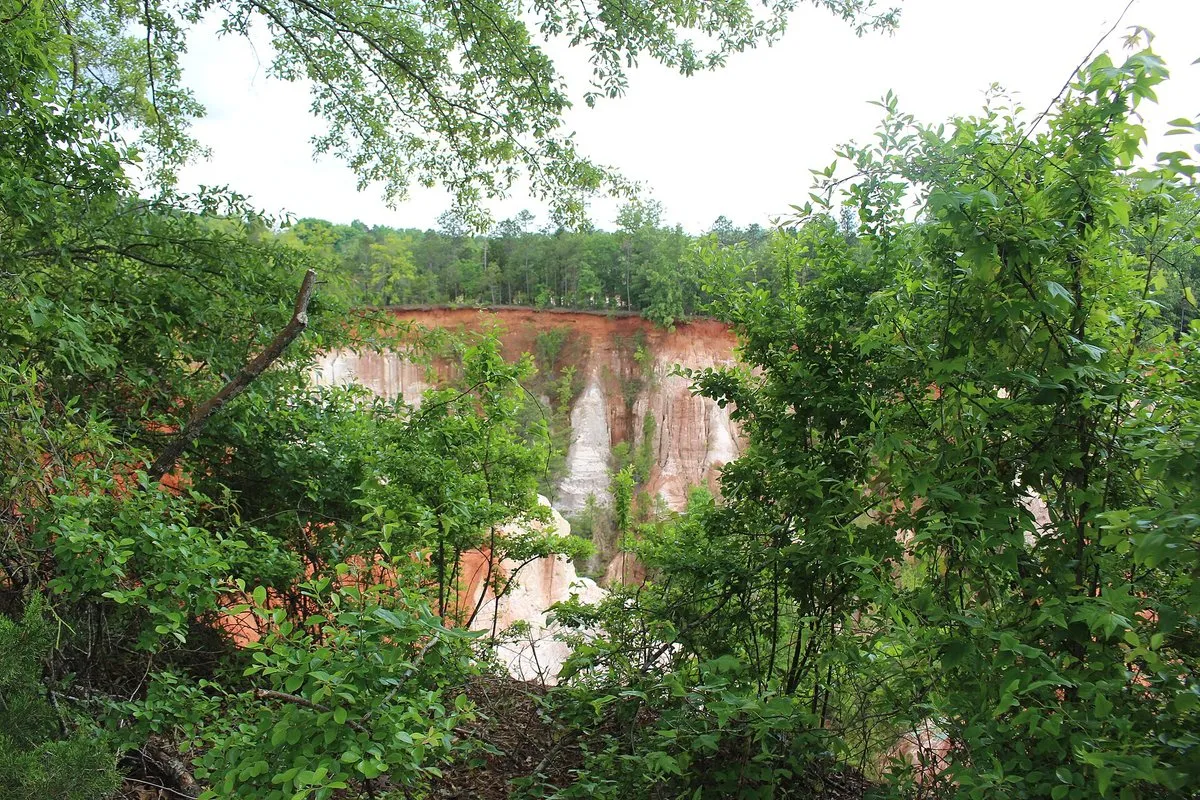
Carved into the red clay hills of southwest Georgia, Providence Canyon State Park preserves a series of dramatic ravines that have earned it the nickname Georgia’s Little Grand Canyon. The park sits near Lumpkin in Stewart County, about 150 miles southwest of Atlanta, and covers land where severe erosion beginning in the 19th century inadvertently created one of the state’s most striking geological features. What started as poor farming practices gradually exposed layers of soil in vivid shades of pink, orange, purple, and white, producing canyon walls that look almost painted. Today the park draws visitors who come specifically to walk among those walls, camp overnight in the backcountry, and photograph colors that shift dramatically with the light throughout the day.
The Canyons Themselves
The canyons are the reason to visit, and they reward time spent at the bottom as much as at the rim. The main canyon complex contains 16 individual canyons, some reaching depths of up to 150 feet. Visitors can descend into the canyon floors on designated paths and walk among the formations directly, which sets this park apart from canyon destinations where viewing is strictly from above. The exposed soil layers create a geology lesson in color: pale lavender clay sits beside burnt orange, with streaks of white kaolin running through walls that change appearance depending on cloud cover, rainfall, and season. Early morning and late afternoon light tend to produce the richest colors. Winter months, when deciduous trees have dropped their leaves, often offer the clearest views of the full canyon depth.
Trails and the Backcountry Loop
The park’s trail system centers on the Canyon Loop Trail, a 2.5-mile route that travels both the canyon rim and the floor. The first section brings hikers along the rim with overlook views, then drops into the canyon itself before circling back out. The full loop takes about two hours, though visitors should allow extra time to explore. Those who want canyon floor access without committing to the backcountry trail can stay on the white-blazed Canyon Loop Trail and explore the numbered canyons as out-and-back side trips.
The seven-mile backcountry trail extends beyond the main canyon loop into surrounding woodland and connects to the primitive campsite area. This route winds through mixed forest, river birch, and old logging road sections that contrast with the dramatic canyon landscape. It is a quieter, shadier experience than the canyon floor sections and is best suited to hikers comfortable with uneven, rooted trail surfaces.
Backcountry Camping
Providence Canyon offers primitive backcountry camping at six designated sites accessible only on foot via the backcountry trail. Campers must pack in all gear and pack out all waste. No water or electrical hookups are available at the campsites, and campers should arrive prepared with filtered water or sufficient supply. Each site accommodates up to 10 people and requires a reservation in advance. Camping along the backcountry trail after sunset offers a stillness that day visitors rarely experience, and morning light in the canyon can be exceptional for photography before crowds arrive. There are no RV hookups or standard drive-in tent campsites for individual campers at this park, though the park does have pioneer campsites for group use.
Pet Policy
Leashed pets are welcome on the trails and in most outdoor areas of the park. Owners are responsible for keeping pets on a leash no longer than six feet at all times. Pets are not permitted inside park buildings. Given the uneven terrain in the canyon and the heat that can build up on the canyon floor during summer, visitors should evaluate whether the conditions are appropriate for their animals before bringing them into the canyon.
Wildlife to Be Aware Of
The canyon environment creates specific safety considerations that visitors should take seriously before descending from the rim. The canyon walls are composed of loose, unstable soil that continues to erode actively. Edges can give way without warning, particularly after rain, and visitors should stay on marked trails and respect all fencing and barriers at the rim. Attempting to climb the canyon walls or approach the edge beyond designated areas carries a genuine risk of collapse.
Venomous snakes are native to Georgia and may be encountered throughout the park, on rocky canyon floors and along wooded backcountry trails alike. Watch where you step, particularly when crossing rocks, stepping over logs, or moving through vegetation near the trail edges. Wearing boots rather than open footwear when hiking the canyon is strongly recommended. Give any snake you encounter plenty of space and do not attempt to handle or move it.
Loose soil and steep drop-offs throughout the canyon require attentive footing at all times. After rainfall the canyon floor and descending paths can become slick and footing becomes less predictable. If conditions are wet, allow extra time, move carefully on descents, and avoid standing near the base of canyon walls where erosion and small slides are more likely.
Practical Information
Providence Canyon State Park is located at 8930 Canyon Road in Lumpkin, Georgia, approximately seven miles west of town on Georgia Highway 39C. The nearest larger city is Columbus, about 45 miles to the northeast. The park charges a $10 per vehicle daily parking fee. An annual ParkPass is available for visitors who plan multiple trips to Georgia state parks throughout the year. Backcountry camping requires a reservation, which can be made through the Georgia State Parks reservation system. The park is open year-round, though summer heat in the canyon can be intense and hikers planning full loop walks should start early and carry adequate water. Spring and fall offer the most comfortable temperatures for extended hiking.
Frequently Asked Questions
Are dogs allowed at Providence Canyon State Park?
Leashed pets are welcome on the trails and in most outdoor areas of the park.
How much does it cost to visit Providence Canyon State Park?
Daily parking is $10 per vehicle, and an annual ParkPass is also available for visitors who plan to return.
How do I reserve a backcountry campsite at Providence Canyon?
Backcountry camping requires a reservation in advance, and each of the six primitive sites accommodates up to 10 people with all gear packed in and all waste packed out.
Can you walk inside the canyons at Providence Canyon, or is it just rim viewing?
Visitors can descend directly onto the canyon floors via designated paths on the 2.5-mile Canyon Loop Trail, which travels both the rim and the floor of the main canyon complex.