
Hawks Nest State Park
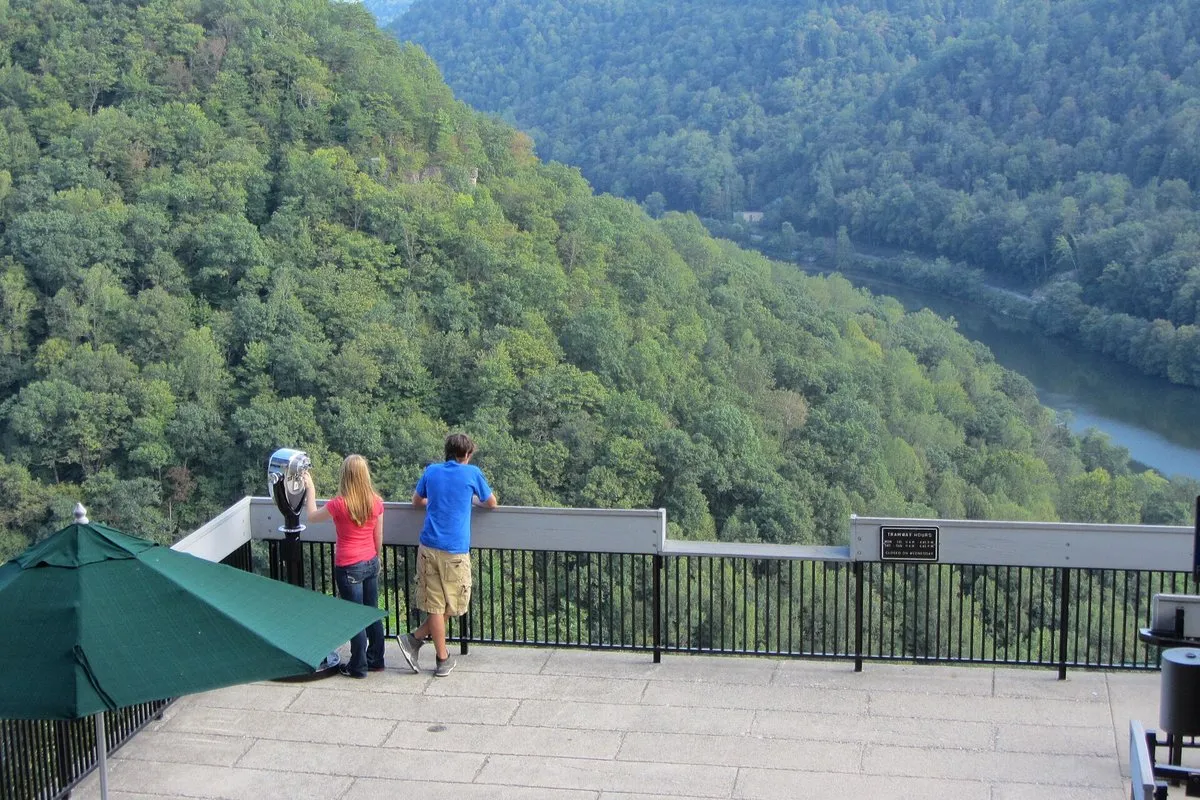
Hawks Nest State Park perches along the rim of the New River Gorge in Ansted, West Virginia, offering one of the most dramatic canyon views in the eastern United States. The park sits about 585 feet above the New River, and the overlooks along the clifftop give visitors a sweeping view down into the gorge and across miles of forested ridgeline. It is a compact park, but what it lacks in size it makes up for in scenery and a handful of genuinely distinctive attractions that draw visitors from across the region.
New River Gorge Overlooks
The overlooks are the reason most people come to Hawks Nest. The main overlook platform sits just steps from the parking area and delivers an unobstructed view into the gorge, with the New River visible far below winding through rock walls and dense forest. The view is striking at any time of year, but fall color transforms it into something exceptional, typically peaking in mid to late October. A second overlook area provides slightly different angles along the rim, and both spots are accessible without any significant hiking. Sunrise and clear mornings tend to offer the best visibility, with fog occasionally filling the gorge in dramatic fashion during cooler months.
Aerial Tramway and Jet Boat Rides
Hawks Nest has long been one of the few state parks in [West Virginia](/west-virginia) with an aerial tramway. The tram runs from the clifftop down to the river level, dropping passengers roughly 500 feet into the gorge. The tramway has been under renovation, so visitors should confirm its current status before planning around a ride. The marina area at the base is also the setting for seasonal jet boat rides on the New River, with shuttle access used when the tram is not operating. The jet boats travel upstream through calmer sections of the gorge, giving a completely different perspective of the canyon walls from water level. Jet boat tours charge separate fees and operate on a seasonal schedule, and tram fees apply when tram service is running, so confirming availability before your visit is worthwhile. These two attractions together make Hawks Nest genuinely unlike most state parks in the region.
Hiking the Gorge Rim and Forest Trails
The park has a modest trail system of about eight miles, but the routes it does offer are worth walking. The short, paved Hawks Nest Overlook Trail runs from the parking area to the main overlook. The Cliffside Trail is the park’s main rim hike, a 3.5-mile out-and-back route between the Midland Trail Shelter area and the Hawks Nest Overlook, though it runs moderate to difficult with rugged sections and steep drop-offs rather than the level stroll the setting might suggest. The GSYP Canyon Trail descends from the lodge area toward the New River near the tram and jet boat launch, a more strenuous option with steps most of the way and a closer look at the forested slopes. The Fisherman’s Trail, Park Loop Trail, Lovers Leap Trail, and Hawks Nest Rail Trail add shorter options, though the Hawks Nest Rail Trail is temporarily closed until June 2026 for repairs, so checking current trail notices before heading out is a good idea. Total maintained trail mileage is limited, so serious hikers looking for a full day on trail may want to pair a visit here with nearby New River Gorge National Park and Preserve, which shares the same landscape and offers an extensive backcountry network.
Lodge, Museum, and Park Facilities
The park lodge sits along the rim and offers guest rooms with gorge views. The lodge also has a restaurant open to guests and day visitors, making it a reasonable spot for a meal with a view. An on-site nature museum and historic CCC structures interpret the park’s natural and human history. Around the overlook area, interpretive material also addresses the controversial Hawk’s Nest Tunnel project of the 1930s, in which hundreds of workers died from silicosis during a hydroelectric drilling project through the ridge. That history is a sobering and important part of understanding this landscape. The museum is worth a stop when open.
Pet Policy
Pets are welcome in Hawks Nest State Park. Dogs and cats are the only pets permitted, and they must be kept on a sturdy leash no longer than ten feet in public use areas. Leashed pets are allowed on the trails and in most outdoor areas of the park. Pets are generally not permitted inside public park buildings, but the Hawks Nest Lodge does have two designated pet-friendly rooms for pets under 50 pounds, with a $40 pet fee. Check with the park before planning to take a pet on the aerial tramway. Owners are expected to clean up after their animals.
Wildlife to Be Aware Of
The forested gorge terrain at Hawks Nest supports a range of wildlife, and a few species require specific caution. Black bears live throughout the area and are most active along the wooded gorge trails at dawn and dusk. Make noise while hiking, avoid carrying strong food smells on the trail, and give any bear you encounter significant space. Do not approach or attempt to feed them.
Timber rattlesnakes are present on the rocky ledges and clifftop overlook areas. Watch where you step and where you place your hands, particularly around rock outcroppings and along the rim. Copperhead snakes also live in the park along wooded trails and near stream corridors. Both venomous species are most active in warm weather and are generally not aggressive, but accidental contact is the main risk. Sturdy footwear and visual attention to the ground around you reduces that risk considerably.
White-tailed deer are common near trailheads and roadsides throughout the park. They become especially active at dusk and into the evening, so drivers should reduce speed and stay alert on the approach roads during those hours.
Practical Information
Hawks Nest State Park is located on US Route 60 in Ansted, West Virginia, about 12 miles north of the town of Oak Hill and roughly 65 miles southeast of Charleston. The park is free to enter with no vehicle or day-use fee. Fees apply for aerial tramway rides when operating, jet boat rides, and overnight lodging at the park lodge. Reservations for the lodge can be made through the West Virginia State Parks reservation system. Jet boat operations run seasonally, generally from spring through fall, and the tramway’s schedule depends on renovation status and weather. Most overlooks and trails are accessible year-round during daylight hours, but checking current trail notices before heading out is worth the few minutes it takes.
Frequently Asked Questions
Is there an entry fee for Hawks Nest State Park?
Hawks Nest State Park is free to enter with no vehicle or day-use fee. Separate fees apply for the aerial tramway, jet boat rides, and overnight lodging at the park lodge.
Are dogs allowed at Hawks Nest State Park?
Leashed pets are welcome on the trails and in most outdoor areas of the park, with leashes required to be six feet or shorter. Pets are not permitted inside park buildings or on the aerial tramway.
Does Hawks Nest State Park have camping?
Hawks Nest State Park does not offer camping, but nearby options include Babcock State Park and New River Gorge National Park, which share the same general landscape.
Is there a restaurant at Hawks Nest State Park?
The park lodge has a restaurant open to both overnight guests and day visitors, making it a convenient option for a meal with views of the New River Gorge.