
Fort Abraham Lincoln State Park
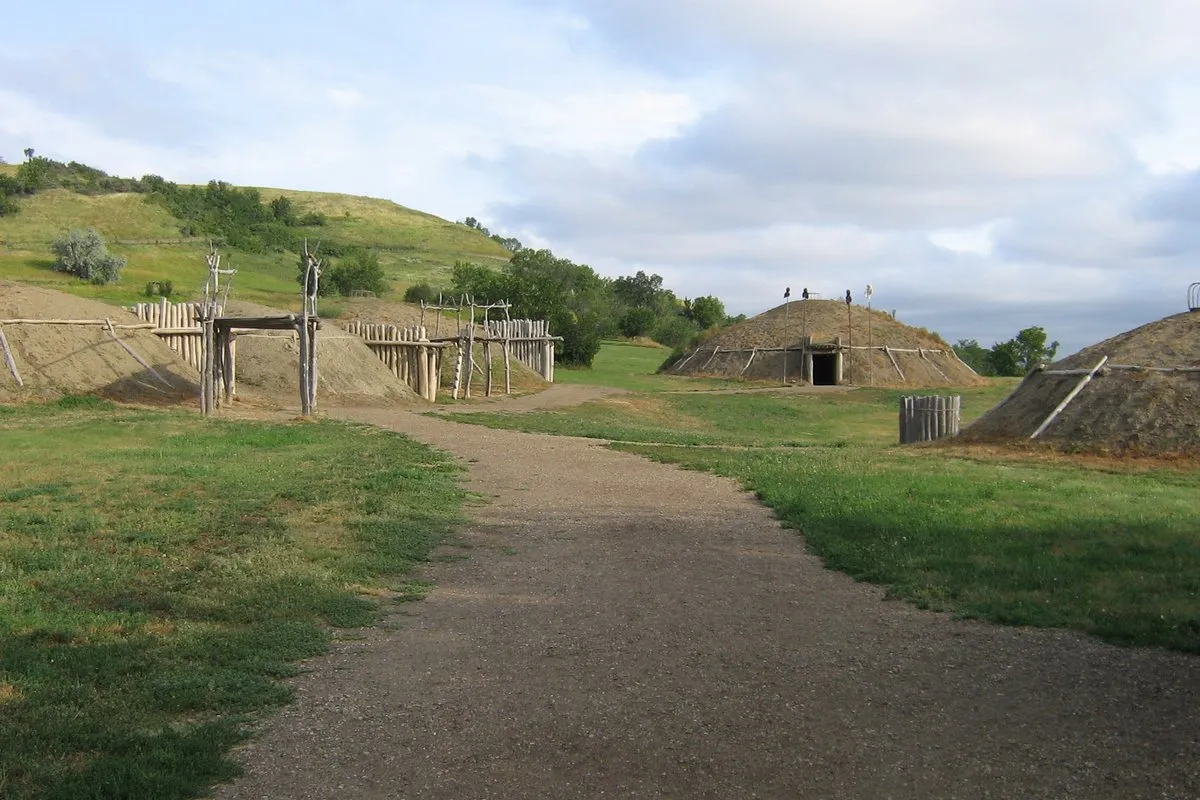
Fort Abraham Lincoln State Park sits along the west bank of the Missouri River just south of Mandan, North Dakota, combining two major chapters of American history on a single stretch of bluffs and bottomland. The park preserves the reconstructed on-post buildings of Fort Abraham Lincoln, the cavalry post from which Lieutenant Colonel George Armstrong Custer led the Seventh Cavalry on its ill-fated 1876 expedition to the Little Bighorn, alongside the remains of a much older On-A-Slant Mandan village occupied for roughly 200 years before the fort was ever built. That layering of Indigenous and military history, set against wide views of the Missouri River valley, gives the park a depth that few historic sites in the region can match.
The Historic Sites: Mandan Village and Fort Abraham Lincoln
The reconstructed On-A-Slant village is the centerpiece of the park and the reason many visitors make the trip. The Mandan people lived here from approximately 1575 to 1781, when a smallpox epidemic devastated the population and forced abandonment of the site. Six earthlodges have been reconstructed at On-a-Slant Village, including a large Council Lodge, and the scale of them is striking. These were not small shelters. A single lodge could house multiple family groups, their horses, and substantial stores of food. On-a-Slant Indian Village is open for self-guided tours during the summer; living-history tours of the Custer House and Historic Fort operate Memorial Day weekend through Labor Day, offering considerable context that a walk through on your own cannot replicate.
The military post structures, including the Custer House, the commissary, and the cavalry barracks, were reconstructed based on historical records and archaeological work. Interpreters in period dress staff the buildings during peak season. The Custer House in particular draws visitors who want to walk through the rooms where Custer and his wife Elizabeth lived before the 1876 campaign.
Trails and River Views
The park has a trail network suited to casual hikers rather than serious backcountry travelers. Paths wind through the bluffs above the river, connecting the historic sites and offering broad views across the Missouri. The terrain is rolling grassland and wooded ravines, and the trails are generally well-marked and manageable for most fitness levels. Total trail mileage is modest, making this more of a half-day hiking destination than an all-day wilderness experience, though the scenery and the stops along the way can easily fill a full afternoon.
The bluff overlooks are among the best vantage points on this stretch of the Missouri, and the light in the late afternoon hours makes the river valley particularly striking.
Camping
The park offers a campground with electrical hookups and a separate primitive camping area. Amenities include modern restrooms and shower facilities. The campground is a practical base for visitors who want to spend more than a day exploring the historic sites, the trails, or the broader Bismarck-Mandan area. Sites can fill up during peak summer weekends and during organized events, so reservations are advisable. The park also hosts living history events and other programming through the summer that can make an overnight stay more worthwhile.
Pet Policy
Pets are welcome in the park and must be kept on a leash no longer than six feet at all times. Pets are allowed on trails and in the campground. They are not permitted inside any of the historic buildings or reconstructed structures. Clean up after your pet, and be aware that the open grassland terrain means encounters with wildlife, including snakes, are possible even close to the developed areas.
Wildlife to Be Aware Of
Prairie rattlesnakes occur in the region, so visitors should use snake precautions on warm-weather trails, particularly on the bluff trails and rocky hillsides during warm months from late spring through early fall. Watch where you step and avoid reaching into brush, rock piles, or tall grass where a snake might be resting. If you hear a rattle, stop, locate the snake, and move away calmly. Wearing closed-toe shoes or boots rather than sandals is a reasonable precaution on the trails.
Wildlife such as deer, birds, and other animals may be encountered around developed areas; observe all wildlife from a distance and do not feed animals. They may appear approachable, but feeding them creates dependency, can make animals aggressive, and draws them into areas where conflicts with people and pets become more likely. Keep food stored properly and observe wildlife from a respectful distance.
Coyotes may be present in the region; keep pets leashed and do not leave pets unattended outside. Supervise small children in areas with low visibility. Coyotes that have been fed by humans or have become habituated to people can become bold, so never offer food and make noise to deter any animal that approaches too closely.
Practical Information
Fort Abraham Lincoln State Park is located at 4480 Fort Lincoln Road, Mandan, North Dakota, roughly seven miles south of Mandan via Highway 1806. Mandan is the nearest city; Bismarck is nearby across the Missouri River. The coordinates are 46.7727, -100.8374.
The daily vehicle entry fee is $7. Annual passes are available and can be a good value for North Dakota residents who visit multiple state parks through the year. Check the North Dakota Parks and Recreation permits and gift cards page, or reserveNDparks.com, for current entrance permit rates and updates.
The park operates year-round, though interpretive programming and guided tours run primarily from late spring through early fall. Some facilities may have reduced availability in winter. Campsite reservations can be made through the North Dakota Parks and Recreation Department reservation system, and booking ahead is recommended for summer weekends and holiday periods.
Frequently Asked Questions
What is the entry fee for Fort Abraham Lincoln State Park?
The daily vehicle entry fee is $7, and annual passes are available for visitors who plan to visit multiple North Dakota state parks throughout the year. Current rates can be confirmed at parkrec.nd.gov/fees.
Are dogs allowed at Fort Abraham Lincoln State Park?
Pets are welcome on the trails and in the campground but must be kept on a leash no longer than six feet at all times and are not permitted inside any of the historic buildings or reconstructed structures. Owners should be aware that rattlesnakes and coyotes are present in the park, so keeping pets close and supervised is important.
Can you tour the Custer House and other fort buildings?
The Custer House, cavalry barracks, and commissary are all reconstructed based on historical records and are staffed by interpreters in period dress during peak season. Guided tours of the On-A-Slant Mandan village earthlodges also run through the summer and are the best way to get full context for the site.
Are there rattlesnakes on the trails at Fort Abraham Lincoln?
Prairie rattlesnakes are present in the park, particularly on the bluff trails and rocky hillsides during warm months from late spring through early fall. Wearing closed-toe shoes or boots, watching where you step, and avoiding reaching into brush or rock piles are all practical precautions.