
Jockey's Ridge State Park
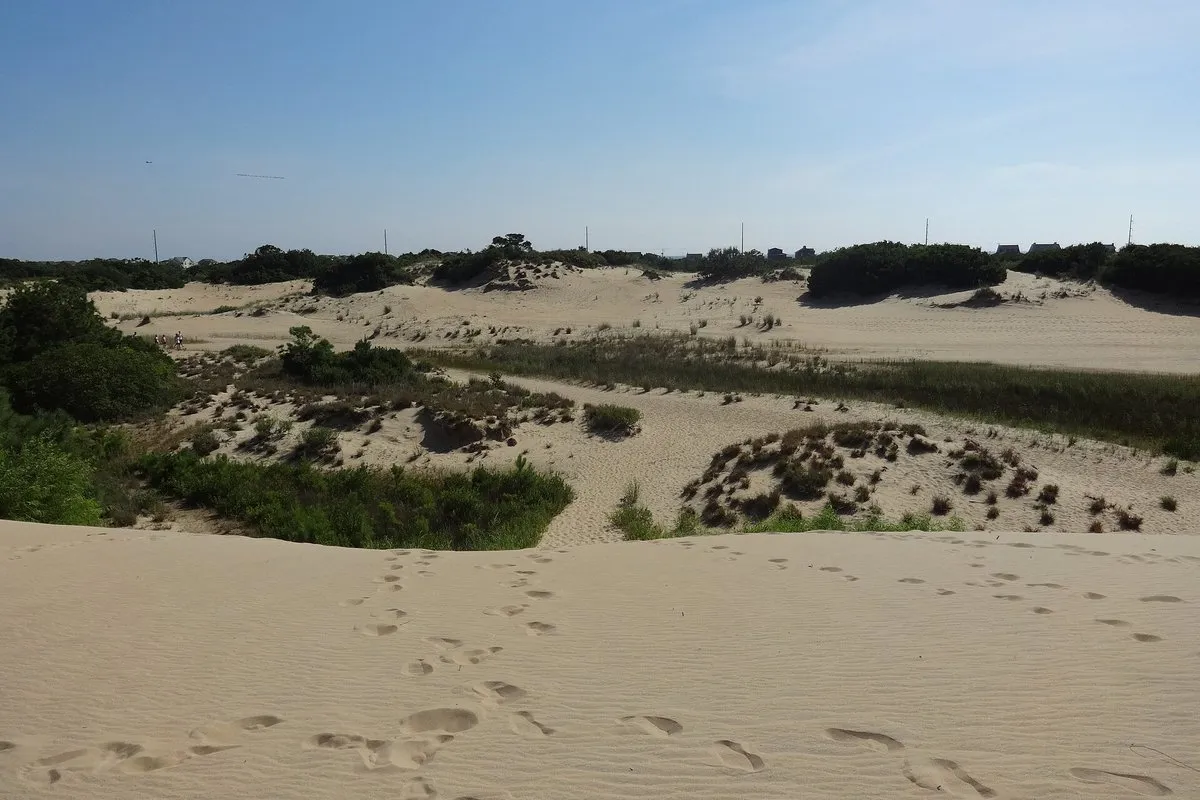
Jockey’s Ridge State Park protects the tallest living sand dune system on the East Coast, rising up to 100 feet above the flat landscape of the Outer Banks in Nags Head, North Carolina. The dunes are constantly moving and reshaping, making it a landscape that shifts noticeably year to year. Visitors come to climb the open sandy ridges, fly kites in the steady Atlantic winds, and take in sweeping views of Roanoke Sound to the west and the Atlantic Ocean to the east.
The Dunes
The main dune at Jockey’s Ridge is classified as a medano, a large, isolated dune that migrates under the force of prevailing winds. The dune has shifted its position over time and continues to move at a measurable rate each year, burying trees and structures at its edges and exposing them again on the opposite side. The sand is fine and pale, and the surface temperature can rise significantly on sunny days, so bare feet require caution in summer. The climb to the top is short but steep, and the loose sand makes every step feel earned. From the summit, the view takes in Albemarle Sound, the Wright Brothers National Memorial, and the Atlantic coastline in both directions.
Hang Gliding
Jockey’s Ridge is one of the few places in the country where the terrain is naturally suited to hang gliding. The dune’s height, consistent winds, and soft landing surface make it a natural training ground. Kitty Hawk Kites, located just outside the park, has been offering hang gliding lessons at the dune for decades and remains a popular option for first-time flyers. Watching students launch and glide down the face of the dune is part of the daily scene here, and experienced pilots can obtain permits through the park to fly independently.
Soundside Trail and Natural Area
Beyond the dunes, the park includes a 1.5-mile trail that winds through maritime shrub habitat toward the shore of Roanoke Sound. The trail passes through areas where the dune has historically migrated, leaving behind a mix of exposed tree stumps, scrub vegetation, and open sandy flats. The soundside area offers a quieter experience than the dune itself, with opportunities to spot shorebirds and wading birds along the water’s edge. Sunsets viewed from the sound shore are a draw in the evening hours.
Pet Policy
Pets are welcome at Jockey’s Ridge State Park and must be kept on a leash no longer than six feet at all times. Pets are allowed on the dunes and on the trails throughout the park. Owners are responsible for cleaning up after their animals. Pets should not be left unattended, and visitors should be mindful of hot sand temperatures during summer months, which can be hard on paws.
Practical Information
Jockey’s Ridge State Park is located at 300 West Carolista Drive in Nags Head, North Carolina. The coordinates are 35.9637, -75.6326. The park sits directly off US Highway 158, also called the Croatan Highway, in the heart of the Outer Banks commercial corridor. Nags Head is the nearest town, and Kill Devil Hills borders the park to the north.
Admission to the park is free. The parking lot is large but fills quickly during peak summer weekends, particularly on mornings with good wind conditions. The park is open year-round, with hours varying by season. Summer hours typically run from 8 a.m. to 9 p.m., while winter hours close earlier in the evening. Restrooms and a visitor center with exhibits on dune ecology and history are available near the main entrance. No camping is permitted within the park.
Wildlife to Be Aware Of
The sand surface at Jockey’s Ridge can reach temperatures well above 120 degrees Fahrenheit on a sunny summer day. Bare feet and unprotected paws can burn within seconds on exposed dune sand in the middle of the day. Wear closed-toe shoes on the dunes in summer and check the sand temperature before allowing dogs to walk on it. Ticks are active along the Soundside Trail from spring through fall, where the maritime shrub and scrub vegetation creates suitable habitat. The open dune surface is low risk, but any time spent in the low-lying vegetation between the dune and the sound should be followed by a tick check. Deer flies and biting gnats are a consistent nuisance on the Outer Banks in warm months, particularly when the wind drops. Bring insect repellent. Hang gliding is an active part of the park experience, with student pilots and experienced flyers launching and landing on the main dune face throughout the day. Watch for hang gliders when on or near the upper dune, give them clear space to approach and land, and do not stand in the launch or landing zones without checking the activity around you.
Frequently Asked Questions
Is there an entry fee for Jockey's Ridge State Park?
Admission to Jockey's Ridge State Park is free for all visitors.
Are dogs allowed at Jockey's Ridge State Park?
Pets are welcome on the dunes and trails throughout the park and must be kept on a leash no longer than six feet at all times. During summer months, owners should be mindful of hot sand temperatures, which can burn paws.
Can you hang glide at Jockey's Ridge State Park?
Hang gliding is a popular activity at the park, and Kitty Hawk Kites, located just outside the park entrance, offers lessons for first-time flyers on the dune face. Experienced pilots can obtain permits through the park to fly independently.
How tall are the dunes at Jockey's Ridge State Park?
The dunes at Jockey's Ridge rise up to 100 feet above the surrounding Outer Banks landscape, making it the tallest living sand dune system on the East Coast. The climb to the summit is short but steep due to the loose, shifting sand.